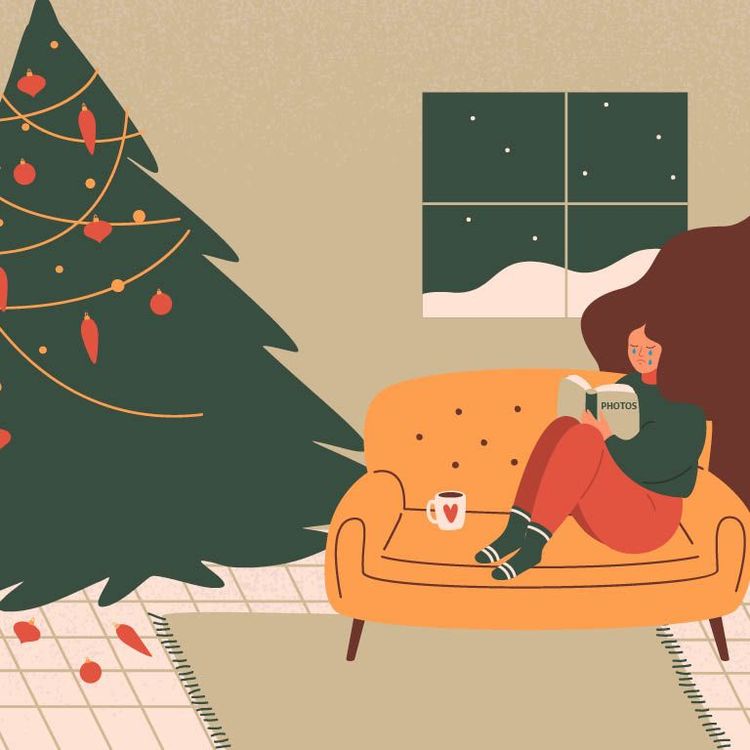
The festive period can be particularly difficult after a bereavement. Whether this is your first Christmas without a loved one, or they died some time ago, there'll be an empty chair – and that grief is very real.
Grief can make it harder to deal with everything else this time of year brings. The cooking, decorations, shopping, socialising and people's expectations can feel daunting. You might feel differently about Christmas traditions now – they might even trigger your grief. It’s okay to do things differently and it’s okay to ask for help.
If you’re struggling to cope this Christmas, here are some practical suggestions I’ve learnt from supporting bereaved people at this time of year, alongside insights from people who’ve done it themselves.
Preparing for the festive season
The anticipation of the first Christmas after a loved one has died can be very difficult. Feeling out of touch with rituals that you've always enjoyed can feel like a secondary loss too. Grief can change the way life looks and feels. You're not being a 'grinch'; you're coping with immense loss after a very difficult time. However, I've found that most of the people I've supported will later say that the anticipation was actually far worse than the day itself.
Giving and getting Christmas cards
Sending Christmas cards, particularly that first Christmas, can be very difficult. It can be very painful to leave your loved one’s name off the card, and equally painful to receive cards addressed just to you. In my experience, there’s no expectation from others that you need to send out cards if you don’t want to.
If you’re worried about this, consider asking someone close to you to spread the word about your wishes, for example that you won’t be sending cards this year and would prefer not to receive them. Chances are people will be pleased to have a chance to support you in the way you prefer at such a difficult time.
Doing the decorations (or not)
Sometimes it can be the things that represent the excitement and hope of Christmas that hit the hardest when someone we love has died. For some, this is getting the Christmas decorations up. Particularly during the first Christmas without your loved one, you just might not be in the mood. That's okay.
In future, you may feel differently and create new traditions, or find new ways to make the process of decorating for Christmas special. But for now, do what feels right for you.
Handling socialising
Parties and family gatherings may feel too much when you're just trying to get through each day. Think through what expectations there are around your time. Don't be afraid to opt out of anything that you feel will be especially upsetting or tiring for you. People will understand that you have limited energy. Looking ahead can help avoid last-minute disappointment.
One lady I supported said how she found it very helpful to know in advance who was going to be present at planned events and what would be happening, so she could visualise it and prepare herself. Even if you think it's all okay, think about having a plan B in case you just don't feel like it on the day.
Christmas Day
You might prefer to keep the traditions as close to normal as you can, or to not celebrate at all – and that’s okay. You might prefer to be alone, connect with a select few, or to talk to as many people as possible. There's no right or wrong. Only you can say what feels best to you on the day. People will understand and respect your wishes. It's also possible to appreciate those around you and still mourn who and what you've lost.
Keeping traditions going...
Lots of people want to keep their Christmas traditions going as much as possible. But it’s worth thinking about the pressure that could put you under, and whether you could ask for more help. It may help to prepare people in advance if you’re concerned about feeling pressure. If people normally rely on you making an effort, ask for help to share the work, or have a conversation with them about how you’re feeling so you can consider alternatives.
I supported one lady in the run up to Christmas who was facing the first Christmas without her mum. She’d never cooked a Christmas dinner before, but it became important to her to accomplish it this first Christmas after her mum had died – not only for herself but for her family. After Christmas, when we met again, she reflected that the pressure had been awful! And as tasty as the meal was, it was never going to taste like her mum’s.
Another lady I supported, whose husband had died, dreaded waking up in an empty house on Christmas morning, but didn’t want to be anywhere else. So she arranged for her daughter to spend Christmas Eve night with her.
...or treating it as just another day
Equally, it's fine to opt out of celebrations if you don't feel like it. You have permission to change your mind about plans, take breaks or leave early.
One gentleman I supported didn’t want any Christmases again without his wife. Despite having numerous invitations to spend the day – or just the meal – with others, he declined and decided to create a new routine for himself. He wanted to spend the day alone, visiting the cemetery, playing her favourite music, reminiscing on past Christmases with her. He saw Christmas Day as just another day in the calendar without her, and he wanted to spend it trying to find different things to do without her.
Whatever you decide to do, Christmas Day may be hard, but remember that you've survived harder days. You'll get through this one too.

After Christmas and into the new year
Many of us will have the big day itself as the focus for what we need to get through. But I find that people who are bereaved often find the first New Year without their loved one far harder than Christmas. Stepping into a new year without them or feeling that you’re leaving them behind can be really tough.
If you can, try to acknowledge that this time of year can be hard, that you need to be kind to yourself, and that these feelings are to be expected and totally normal can be a helpful part of prepping your first Christmas without someone.
Call us on 0800 090 2309 to speak to a trained member of the team or talk to us via our online chat for emotional support and practical information. We're here to help over the festive period. See our Support Line opening times here.
You can also read information online on grieving your way or order a booklet on when someone dies.
This article has been revised and updated. It was originally published in December 2020.