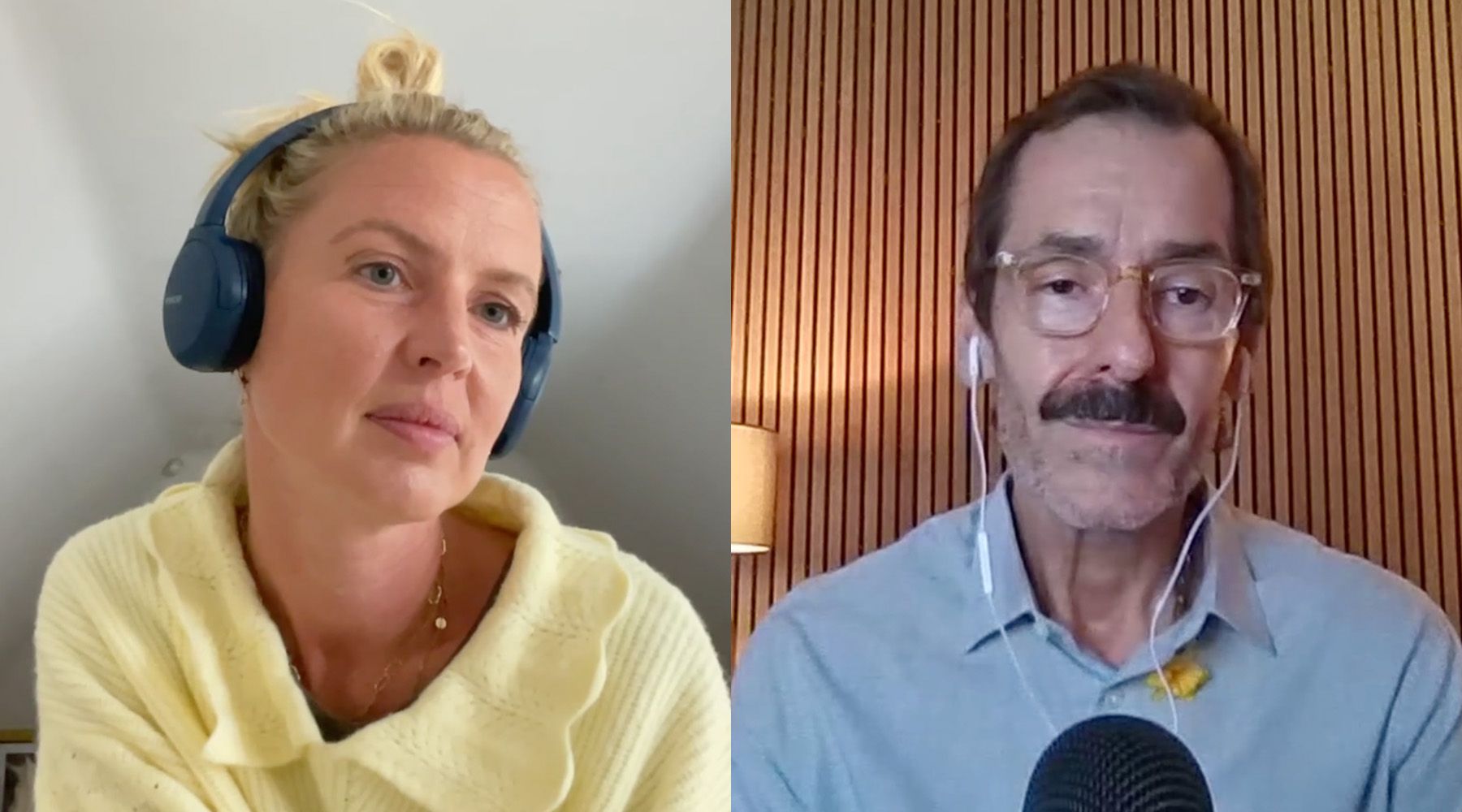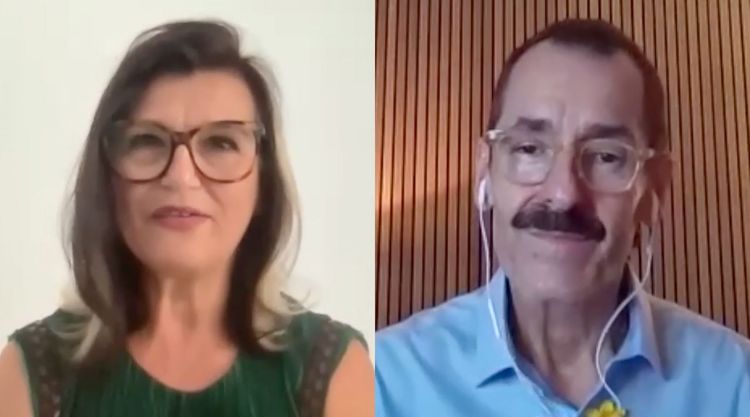
Grief author, coach and widow of ‘Hairy Biker’ Dave Myers, Lili Myers, joins Jason Davidson On the Marie Curie Couch.
Lili and Jason discuss how chemotherapy changed Dave’s sense of identity, how Dave wanted to die at home, and the extra layer of grieving a public figure.
Watch: On the Marie Curie Couch with Lili Myers (subtitled)Watch: On the Marie Curie Couch with Lili Myers (subtitled)
We both knew that something wasn't right. After Covid, he wasn't feeling very well, and kept saying, 'There's something not right.' Every year in January, we would do a general checkup, both of us, just to make sure that things were right. And towards the end of March, finally, the results came and it was cancer. It hit us like a brick.
We were in a good place at that moment of our lives, where we had a beautiful home, the kids were in a very good place. Work was going well. And all of a sudden, this hit us. We didn't even know how to tell the kids, how to tell our friends, how to tell Dave's working partner. We had no idea how to do that because it was such a shock.
Dave didn't want to tell anybody about what type of cancer he had. I think this was the only control he could have over what was happening to him. He refused completely to inform himself about it. I did all the reading, I did all the questioning. He accepted things.
“He didn’t know who he was anymore”
As everybody knows, food was Dave's passion. He was the one who was cooking at home. From a wife who usually was watching him in the evening, it was like a spectacle, him cooking and explaining to me about ingredients and about herbs and spices and how to blend them. All of a sudden, he couldn't cook anymore. He couldn't eat any more.
From a person who made a life out of being passionate about food, he became somebody who refused to eat because he couldn't. One of the side effects of the treatment was that he had sores in his mouth and his taste buds changed.
That was painful for him because who he was was denied to him. The same with his hair. He was known as a hairy biker. Well, after the first round of chemo, he lost his hair, and he didn't know who he was any more.
“Work perked him up”
One thing that helped him a lot was the idea that there was a project ahead for him to work on. That's when he perked up. When the project came along, he was a changed man. He had more vitality, he was hopeful, more energy.
Then work stopped in November. And he told me, 'This is it. I think this is it.' I refused to accept that. I completely refused. I talked to the producers and I said, 'Look, you have to give him another project. You have to come up with an idea. You have to do something so that we can keep him going.' And there was an idea coming, but he just said, 'No, there's nothing left in me to do that. I think this is it.' And he passed the following February.
“He passed in my arms, the way I wanted”
He didn't want to pass at the hospital, although we always knew that he could. He wanted to be in his own environment. I respected that and created whatever I could to make that happen. We had nurses coming in. We had the local GP coming in a few times. We had hospice nurses and a hospital bed installed to make things easier for him.
In the last two weeks, he refused any sort of food. He couldn't eat. He was more in between worlds. But we were there with him, his best friend, kids, family. We were all there. And he passed in my arms, just the way I wanted him to. And it was a beautiful moment, his last breath. I know some people are kind of scared of it and they wouldn't want to assist something like that. I just think it's such a sacred moment.
“The public lost a friend too”
There was a layer on top of the grief that I was going through, which was dealing with the public side of it. There were hundreds and hundreds of messages that people were sending me. Messages of support. Many of them wanted to express their own grief because, don't forget, Dave was part of their living room for twenty years. They lost a friend.
All of a sudden, I had to deal with somebody else's grief, not mine. That helped me very much. I pushed aside my feelings and my necessity to tend to what I needed, and I started talking to people. More and more people were kind of looking for some sort of comfort.
I wasn't a speaker before. Dave was the star of the family. Dave was the public one, and I was just the one behind, helping and supporting. Once he was gone, I had to find a voice. It was a voice of compassion, a voice of love, a voice of pain.
Two and a half years after, I'm still talking about it and I still want to express those inner feelings, the inner living, the aspects of finding myself on my own. Because when you're in a couple, you rely on each other. You witness each other's lives. There's a safety there. Suddenly, half of it is gone and you have to either learn how to grow it back from within or replace that emptiness with something else.
Listen now
This blog is adapted from Lili's conversation on the On the Marie Curie Couch podcast. To listen to the full episode, tap the Acast player below, watch the subtitled version in the YouTube player above or listen on Spotify, Apple Podcasts or wherever you get your podcasts.