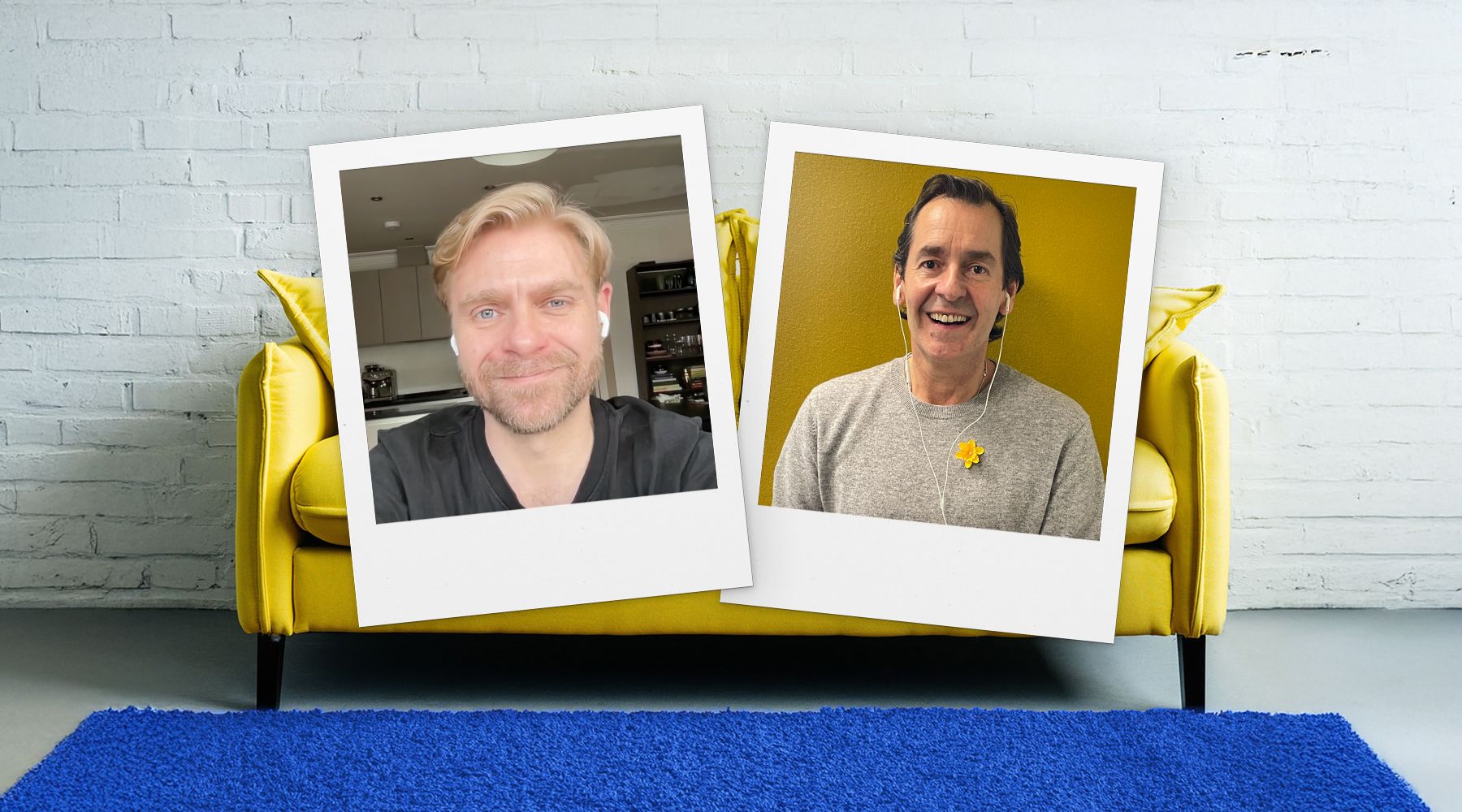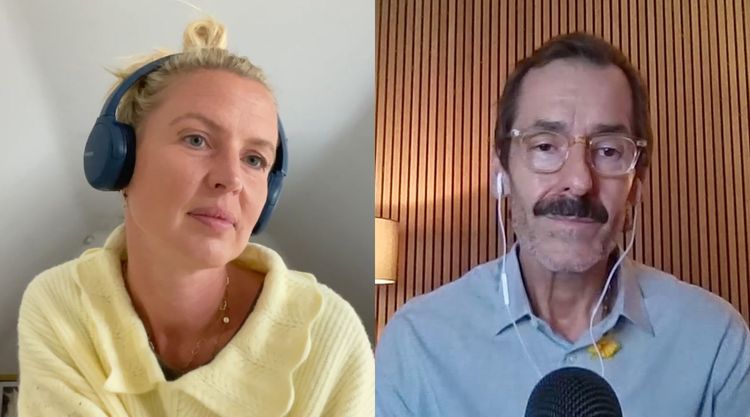
CoppaFeel! co-founder Maren Sheldon joins Jason On the Marie Curie Couch to talk about the death of her twin, Kris, who lived with secondary breast cancer for 15 years.
Watch: On the Marie Curie Couch with Maren Sheldon (subtitled)Watch: On the Marie Curie Couch with Maren Sheldon (subtitled)
“It’s not what you expect to hear at 23”
My twin sister, Kris, died just over two years ago. She was 22 when she first found a lump in her breast. Being 22, it was assumed it's very likely nothing to worry about.
She had a trip to China planned, and while she was there the symptoms got worse. On her return, she went back to our doctor. It wasn't really taken seriously but they investigated immediately and what started as a primary breast cancer diagnosis two weeks later turned into a secondary diagnosis, meaning it had already spread to her spine, meaning it's secondary, it's metastatic. It’s treatable, but you can't survive it.
We were thrown from, 'This is something we can do something about', and I felt quite hopeful with that initial diagnosis, to a case of, 'What can we get out of this life now?' That was obviously not what we expected to hear when she was 23. It was a huge seismic shock.
“Being a twin is a superpower”
My sister was a throw-caution-to-the-wind kind of girl. She's much more of a risk taker. I think after she was diagnosed, she became even more that way. I think I was always known as the more sensible twin, perhaps a bit more think-before-I-do.
Being a twin is a superpower, honestly. You have this protective shield around you when you're growing up, going through school and meeting people that you don't necessarily like or get on with. But actually you feel so untouchable because you always have this person to protect you and to fall back on.
CoppaFeel
She was at this point in her life where she hadn't started anything. She wasn't in a relationship with anyone, she was living at home, so there was no dependence. She started to think about what it was that was lacking in her diagnosis, why it was so delayed, where are the gaps in the education.
She started a campaign that educated young people on knowing the signs and symptoms of breast cancer, getting to know their bodies, understanding the differences, and our normals. That's when CoppaFeel, the breast cancer charity was born, purely out of, I guess, a combination of frustration and a huge desire to stop that from happening to anyone else.
Caring for Kris
In the last year, the spread of disease in her brain meant that cognitively she was really starting to struggle. My care went from the occasional meal to really considering her in all of my days planning and making sure that I came to all of her appointments with her. She started to really struggle with the amount of medications and she had quite an integrative approach to her disease.
She took the advice from lots of people and had lots of supplements and did lots of other things. That's why I'm quite good at managing people's times and calendars and appointments. I think that's where I came into my own a bit.
“She wanted Dawn French there as the Vicar of Dibley”
What she didn't want was to celebrate her life and be unwell that day, so she put this idea to me that she wanted to have a party to celebrate her life.
She wanted Dawn French to be there as the Vicar of Dibley. She was quite resolute in that belief that that should happen. Thankfully, she said yes. I'm not really sure what we'd have done if she had said no.
It was an incredible day. Kris didn't have these keystone moments in your life where people will make the effort to come to a wedding or a christening. Those are the sort of moments where people feel that they have to be there. She felt by calling it a FUNeral, people will make the effort to come. Obviously, no one said no. Everyone came. I remember people saying afterwards that they've never been on such a roller coaster of emotions in such a short space of time. You go from laughing your head off to crying your eyes out and then back to laughing your head off again.
“I was so often known as Kris' sister”
I never took that to heart – I couldn't, because actually the privilege of being her sister meant so much to me that I could laugh about that. But I think being told you're someone's sister as opposed to an individual for so long, you start to forget that you are yourself, you are an individual.
Like, I don't understand how birthdays function without her. We always did massive parties on our birthdays and suddenly I have a birthday and she's not here to share my birthday cards or my birthday cake. It's just this rewiring, relearning and regrowing of who I am. It's an ongoing process, but I do feel like that I'm doing ok.
“It was a privilege to witness someone’s last breath”
Honestly. It felt so surreal and so beyond normality that it felt it's almost like an experience everyone should feel. It's a bit like witnessing a birth. Obviously, I was deeply sad about her no longer being alive, but just the experience of witnessing her death was so incredible. It's made me so interested in the work of palliative care teams and death doulas.
After she died her body being there, I thought I would be scared of it. I don't know why, but I thought I wouldn't want to be with her anymore. I thought I wanted her to be taken quite quickly, but the realisation of it being this vessel of someone that I love so dearly and it's not a scary thing that she's still there in a way, that surprised me.
Listen now
This blog is adapted from Maren's conversation on the On the Marie Curie Couch podcast. To listen to the full episode, tap the Acast player below, watch the subtitled version in the YouTube player above or listen on Spotify, Apple Podcasts or wherever you get your podcasts.