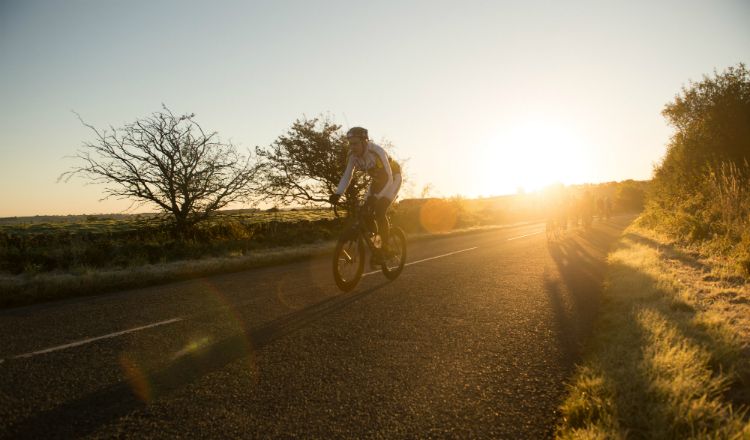
We’ve asked pro-cyclists Scott Thwaites and Zak Dempster from Team NetApp-Endura for their top tips to get you prepared for the big day.
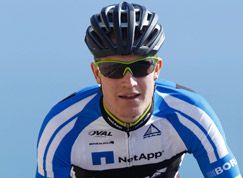
Scott Thwaites
Back to basics
We asked Scott to start with the basics to ensure that you’ve got the core skills covered correctly. Here’s Scott’s advice in an easy-to-digest format.
When hill climbing:
- Use a low gear to avoid putting too much pressure on the legs
- Alternate between pedalling in and out of the saddle
- Start steady so you can give a bit extra on steep sections
During a sprint section:
- Keep a high cadence
- Hold the drops and keep your body low and aerodynamic
- Change into a harder gear when you start to spin out
To corner safely at speed:
- Use both brakes
- Look at the exit of the corner as you approach
- Take a wide entrance and cut in to hit the apex on the corner
For good downhill control without losing too much speed:
- Use both brakes
- Keep your body low
- Avoid skidding the rear wheel
Good gear management advice includes:
- Trying to keep a cadence on around 80-90rpm
- When your legs are spinning too fast make the gear harder
- When you feel pressure on the muscles and the bike slowing, change to an easier gear
Responsible cycling
We asked Scott for his top tips on how to adopt a responsible and impact-free cycling ethos.
- Always put litter in your back pocket until you find a bin
- Take punctured inner tubes home; don’t leave them on the roadside
- Use toilets where possible
- Keep the noise down!
- Ride close together so you don’t have to shout
- Be respectful in residential areas
When riding in groups:
- Keep two abreast at most
- Form single file on narrow lanes
- Use clear signals to indicate change in direction to other road users
Safety first
Last - but certainly not least - we asked Scott for his advice on keeping safe whilst on the road:
- Keep a safe distance from the gutter to avoid any potential obstructions, but stay close enough to allow vehicles to pass you safely
- Communicate with fellow cyclists and road users:
- Point out holes/obstructions in the road
- Alert other riders to any hazards
- Signal early and clearly to allow cars to slow down if necessary
- You – Wear bright coloured clothing during the day, and wear reflective strips and a light on your helmet at night to increase your visibility
- Your bike – Use two lights on both front and rear in case one fails
Zak Dempster
Back to basics
We asked Zak to start with the basics to ensure that you’ve got the core skills covered correctly. Here’s Zak’s advice in an easy-to-digest format.
Take to the hills
- Hill repeats are actually a great way of making the session go quicker
- Find a climb of around 3-8 minutes near your home and aim for 4-5 repeats for close to 30 minutes of climbing. You’ll gain a lot more from doing this than a flat one hour ride and the climbs will be less of a shock during the event
Tackling the sprint section
Gauge your effort - if the ride has been a struggle or you're having a bad day, then don’t push yourself too much as this will, more likely than not, just make things worse
Sharp bend ahead!
Make sure your foot on the side you’re cornering (left corner, left side) is situated at 12 o’clock, at the highest possible point, to avoid contact with the road.
Safety first, safety second on those descents
Don’t go outside of your comfort zone, descend safely at the speed you feel comfortable - it’s better to be dropped than to make a mistake and crash because you were cornering faster than your capability.
Efficient gear management includes:
- Freewheeling to save energy, if you're able to
- Aiming for a cadence of 80-100rpm at all times when pedalling
- Adjusting your gears to the above rpm at all times
Responsible and impact-free cycling
With the ever increasing need to be environmentally friendly, we’ve asked Zak for his recommendations on the best way to adopt a responsible and impact-free cycling ethos.
Keep noise to a minimum
Be aware of your surroundings. There's no need to ride in silence, but don’t shout as you ride through local villages (you’d be surprised how much people can hear as you ride by)
Riding in groups
Be aware of motorists and ride single file if you’re holding them up
Be aware of other riders in your group; make them aware of any obstacles in the road (eg potholes)
Be environmentally friendly
Put your rubbish back in your pocket, and if nature calls, be sensible
Safety tips and advice
Last - but certainly not least - we asked Zak for his personal top tips on the following key safety issues.
Road positioning
- As far left as possible!
- Signalling to other cyclists
- Depends on how comfortable you are taking your hands from the bars, but clear signals such as “hole”, “turning left” and “slowing” should suffice to let others know what you’re doing to stay safe
Signalling to other road users
Make sure it’s obvious what you're about to do and give good clear signals to other road users. Always be aware of cars because you’re going to come off second best if you make a mistake
Being seen both in daylight and darkness
You - there are plenty of good high-vis products on the market now, so make sure you’re visible to those around you
Your bike - a light on your bike is essential