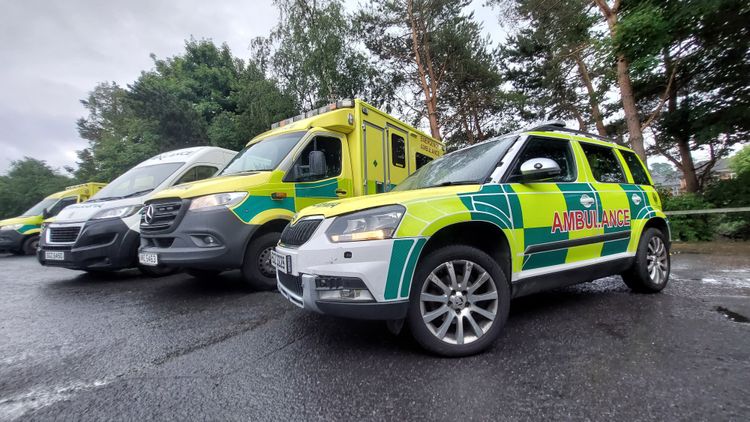
Marie Curie funded two research projects to better understand how people use unscheduled care in the last year of life in Northern Ireland.
A study by Queen's University Belfast (QUB) and Northern Ireland Ambulance Service (NIAS) sought to understand how often and how many people in the last year of their life:
- called 999
- visited the emergency department
- were admitted to a hospital ward in an emergency or planned way.
We also funded a survey with paramedics in NIAS, led by Ulster University (UU), to gain paramedics' perspective on how equipped and confident they felt in responding to patients at end of life.
Gathering this information helps us better understand and demonstrate the scale of the problem, providing robust evidence to support policy and decision-makers in driving health and social care reform, addressing ED pressures, and strengthening community support.
Policy brief on unscheduled care
Read our initial policy brief on unscheduled care in the last year of life. The brief provides a summary of two research reports and sets out some of the most pressing policy and practice issues.
Research report on hospital and ambulance service use
A Marie Curie-commissioned research report by QUB and NIAS on hospital and ambulance service use in Northern Ireland by people in the last year of life, using routinely collected Health and Social Care (HSC) data.
Research on paramedics' experiences
Marie Curie-funded research exploring paramedics' perceptions and experiences of providing end of life care in Northern Ireland.
Lived experience
Behind each figure in these reports are people. Kim and Tasha are just two of the people who struggled to get the care their parents needed.
"The emergency department was busy – and scary"
Get in touch
For more information about the reports and how we can help, contact:
Joan McEwan, Associate Director Policy and Public Affairs, joan.mcewan@mariecurie.org.uk or Christine Irvine, Senior Policy Manager, christine.irvine@mariecurie.org.uk