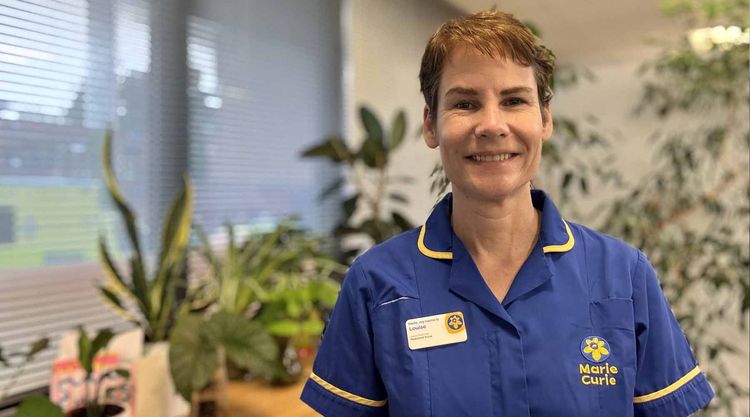
As a Registered Nurse in Marie Curie's Enhanced Hospice Care at Home team, Louise Mortimer supports people living with a terminal illness across Camden and Islington. She explains why hospice care matters, what it can do for people, and what she loves about the job.
Hospice care is so important because it allows people a peaceful and dignified death. It means people can die without suffering. That peace and comfort is the only thing we can all hope for at the end. It’s so important not just for the patient, but for their family, too. Without hospice care, there’s a risk that there are patients out there who will suffer.
“It felt like this was where I was supposed to be”
Early in my career, I spent some time working in hospitals. I just remember it was chaos. People were running around and getting things done. It just felt very medical. It was all about the diagnosis, and fixing people.
So, for those people who were beyond that and just needed a chance to make the most of the life they had left, it wasn’t the right place for them at all.
After that, I did a placement in hospice and I felt I was where I was supposed to be. In the hospice, the time was more gentle, there was more attention paid to the patients’ peace. The pace of care allowed time to really get to know people.
I loved having that time with patients instead of rushing from one to the next. You could sit and talk to them about their lives, meet their families and really get to know them.
I just loved that. I love that sort of connection, and that’s what hospice care is all about – whether it takes place in a hospice, at someone’s home, a care home or even in hospital.
Supporting people at home when they need it most
As a Marie Curie Nurse, my team and I bring specialist palliative nursing care into people’s homes, 8am to 8pm, seven days a week, working alongside GPs, district nurses and local palliative care teams. Because we’re Registered Nurses, we can give injectable medicines, manage syringe drivers and respond when someone’s symptoms become more difficult to control.
This kind of care takes that same idea of looking after people in a hospice, but keeps them at home. We visit those patients and look after them, but in their environment. They get to stay in their place, with their family.
We always ask: “What's your preferred place of care and what is your preferred place of death?”. And most of the time, the answer to both of those questions is “At home”. So from that perspective, we’re giving people what they want. In their own home, they’re spending their last months, weeks and days exactly as they would like to.
Working closely with other teams
Before our team began working in the community, much of this support was managed between local palliative care teams and NHS district nurses, who were already balancing many different demands. Our team has slotted in to provide additional specialist support.
We’re not an isolated service. We work closely with all the professionals involved in someone’s care, each bringing different skills and expertise. By sharing information and working together, we can respond to changes in a person’s condition and help make sure they are as comfortable as possible.
"It's not just about the very end"
People can sometimes think that Marie Curie only becomes involved in the very final days of someone’s life. There can be a feeling that accepting our support means giving up. But that isn’t the case.
It’s not just about the very end. It’s about how we can help someone remain comfortable throughout a process that might take weeks or months.
When people are referred to us earlier, we get the chance to build a really lovely, therapeutic relationship with them and their family. We can get to know what matters to them, manage symptoms as they develop and help them have more quality time together.
Early support can also help someone remain at home for longer, if that is where they want to be. People may visit a hospice for respite or to get their pain and medication under control before returning home.
Patients that stay with me
I remember one gentleman who loved being at home, and we cared for him there. His symptoms eventually meant he needed care in a hospice. After he died, we were out and about when his grandson spotted us from a bus, got off and ran down a hill just to thank us for helping his grandad stay at home for as long as possible. That meant a lot.
Another patient and his wife shared my love of houseplants. After I admired their remarkable begonia, his wife surprised me with two cuttings as a thank-you gift. I still have those plants today, and every time I see them, I'm reminded of that couple and the lasting impact these relationships can have.
The joy of this job
People might think working in hospice care is hard and sad, but there’s another part of it. We get to see lots of joy, we get to see people improving once their symptoms are managed, and getting that precious time to reflect on their lives. Maybe they have people they haven't spoken to in a while coming to visit and there's lots of laughter and remembering. Sometimes they might get to go to a special christening or wedding. It’s just lovely to see that.
That's the thing. Even with a terminal diagnosis, life does go on. And sometimes what a lot of the patients want is just to continue to be involved in that life, you know? And I think we can give them that, especially now we're in the community.
At the very end, to bear witness to someone who has passed in a peaceful way, I think is a beautiful thing. When they’re comfortable, cared for and surrounded by loved ones – it’s very special.