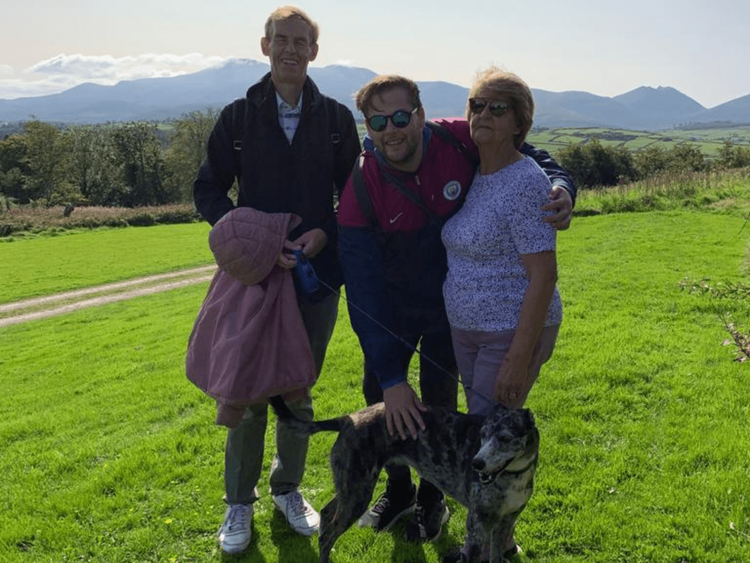
When Neil’s father became terminally ill, he and his wife Sadhbh became carers overnight. Marie Curie support helped them navigate loss and make sense of it.
"Dad was my best friend as well as a big brother"
“It started in 2024, when my husband Neil and I were running a 10K that his parents Peter and Rosemary were supposed to come to,” explains Sadhbh. “They didn’t come as Peter was feeling unwell. That was really out of character as he was always extremely fit and healthy.”
For Neil, his dad had been a constant, “my best friend as well as a big brother, a brilliant dad who was very active and involved.”
Then, suddenly, everything changed.
"It was a whirlwind – it felt like we had no time to come to terms with it"
“It was at the end of April 2024 we got the news that he had had a stroke and collapsed,” Neil recalls. Within days, what felt like a single incident became something much more serious. “We were told not only did he have cancer, but it was stage four and in several places. It was just a whirlwind - it felt like we had no time whatsoever to come to terms with it,” Sadhbh adds.
The diagnosis reframed everything overnight. “Scans told us it was in other places as well, so we knew it was really a case of trying to spend as much time with him as we could, and keep him as comfortable as we could.” As Neil reflects, “I think we all knew without saying it – it was to be a few months or less.”
So, they made a decision as a family.
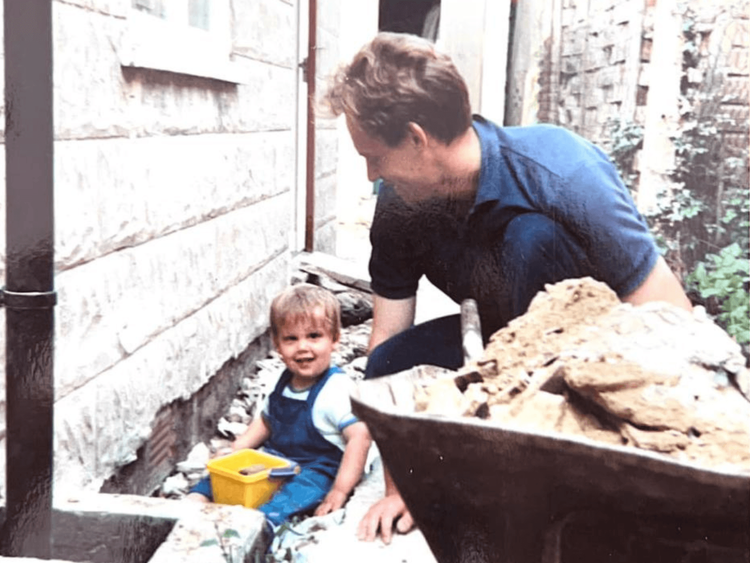
Neil as a child with his dad, Peter
A new reality
“Neil and I packed up our stuff and went over to Northern Ireland to live with Peter and Rosemary and from the end of May we just stayed, till after he passed away in October,” Sadhbh tells us.
What followed was a period of adjustment as roles in the family shifted almost overnight, a new reality neither of them was prepared for. She continues, “I actually don’t think anyone realises what end of life is like until you are in the midst of it with someone."
Peter still tried to hold on to the life he knew. “Even in those months when his condition was deteriorating, he still wanted to do things around the house, he was still doing everything at a million miles an hour to try and help my Mum. It was heartbreaking,” explains Neil.
Very quickly, Neil and Sadhbh found themselves stepping into the role of carers. “We became primary carers for Peter pretty quickly,” Sadhbh says. “There was all the personal care – the feeding and washing – but also just movement, it became a big physical task for us.”
Alongside that was the emotional balance, she adds: “You need to think ‘what’s the comfort that Peter needs? What’s the comfort that Rosemary needs?’ It’s how do you show up for everyone… it’s really complex.”
As the emotional strain and practical demands of caring grew, support became essential.
"I used to call the Marie Curie support line my comfort blanket"
“We reached out to Marie Curie not long after the diagnosis,” Neil explains.
For Neil, what stood out was the difference in approach: “They provide this very human support, there was always a: ‘How are you today?’ something as simple as that.”
For Sadhbh, that support became a daily lifeline. “Marie Curie was a lifeline for us at this point,” she says. “It was incredibly helpful that I was able to access the online articles. I started using the live chat almost daily. There was also the support line.”
Whether it was practical help getting a wheelchair or emotional reassurance, it all mattered. “Sometimes I would just ring up and would be speaking to someone who was listening to me crying - I used to call it my comfort blanket.”
Meanwhile, Neil’s mum Rosemary carried the weight of caring day to day, he explains: “Once dad came home, mum took on his care – being retired she was able to dedicate herself to it. She was getting a lot of advice from the Marie Curie helpline. We always felt like the Marie Curie nurses were there – even though they weren’t actually there.”
“We really tried to make the most of the time”
In between the more difficult days, as a family they cherished the moments of normality. “We really tried to make the most of the time,” says Neil. “When dad was well enough, we’d take the dogs and go off up the hill.”
Neil found Sadhbh’s support invaluable: “she was caring for us all, and she would bring us all together and created very special memories for us like going for fish and chips or local ice cream.”
But Peter’s decline was rapid.
“When his health deteriorated it all happened quite quickly,” Neil recalls. Treatments drained him, and infections followed. “The time from where he was able to do things for himself to the time when he was in hospital was so quick.”
“There’s a difference between someone who is at end of life stage and someone who is actually dying. You don’t know what to look for,” Sadhbh reflects. That uncertainty stayed with them right to the end.
Peter was admitted to hospital for the final time, where Neil and Sadhbh stayed close by his side. “We slept over in the hospital for quite a few nights so he wasn’t on his own” Neil shares.
“On October 10 sadly he passed.”
Neil continues: “He was fighting to the end – in his last words he was telling us all to stay together and look after each other – he was thinking of others till the end.”
The aftermath was immense.
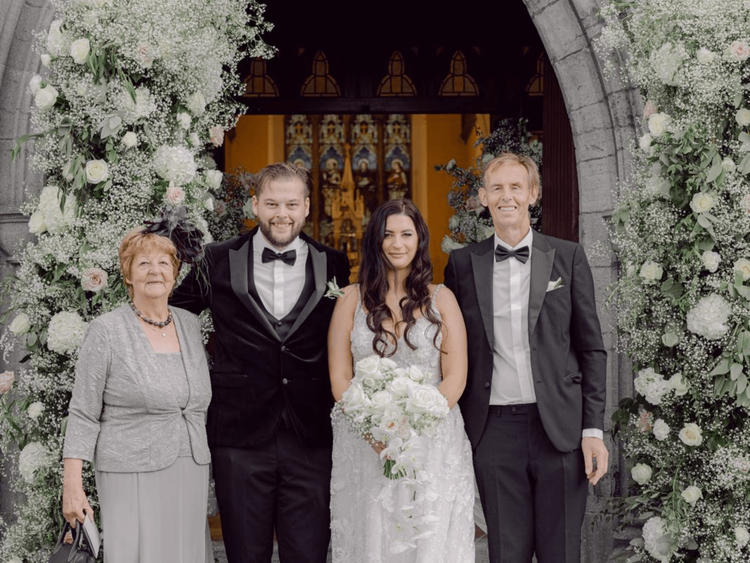
Rosemary, Neil, Sadhbh and Peter on Neil and Sadhbh's wedding day
"Once you leave the hospital that’s it. You don’t have that support anymore."
“It was almost like – losing Peter was the worst thing that could have happened for any of us – but for Rosemary it was almost she was going through the loss of her life with him,” explains Sadhbh.
Neil saw the pain his mum was in, “my Mum was very shell shocked. It was a massive adjustment,” he tells us.
When formal care ended, a different kind of support became vital, as Sadhbh recalls: “Once you leave the hospital… that’s it. That is goodbye. You don’t have that support anymore, but Rosemary still needed support.”
So, they turned to Marie Curie.
"People lose their life partner – but they can come out the other side of it"
“We leaned on the bereavement support… to try and make sense of what had happened,” explains Neil. For Sadhbh, it was about helping Rosemary navigate the unimaginable: “she really benefited from realising that this does happen - people lose their life partner - but that they can come out the other side of it.”
The support line continued to be a lifeline, Neil says. “They say ‘a problem shared is a problem halved’ the more you can start to talk about it, the more it helps.”
Over time, something began to shift.
"To have someone who would listen, not to give advice but just to speak to – that’s so powerful"
Neil has seen that change up close: “she now has the confidence to go off and do things independently; she’s started driving again and meets friends for a coffee,” he says.
“If you think of almost reinventing yourself, taking a new step in your life - it’s huge.”
Looking back, both Neil and Sadhbh see just how pivotal that support was. “Without those conversations with Marie Curie she could still be stuck in the same cycle of grief rather than thriving.”
“For my mum, to have someone who would listen was invaluable. Not even necessarily to give advice, but just to speak to – that’s so powerful.”
“Rosemary is doing really well – she has really come out the other side and tried really hard and that is all we can ask of her. She’s an amazing person,” reflects Sadhbh.