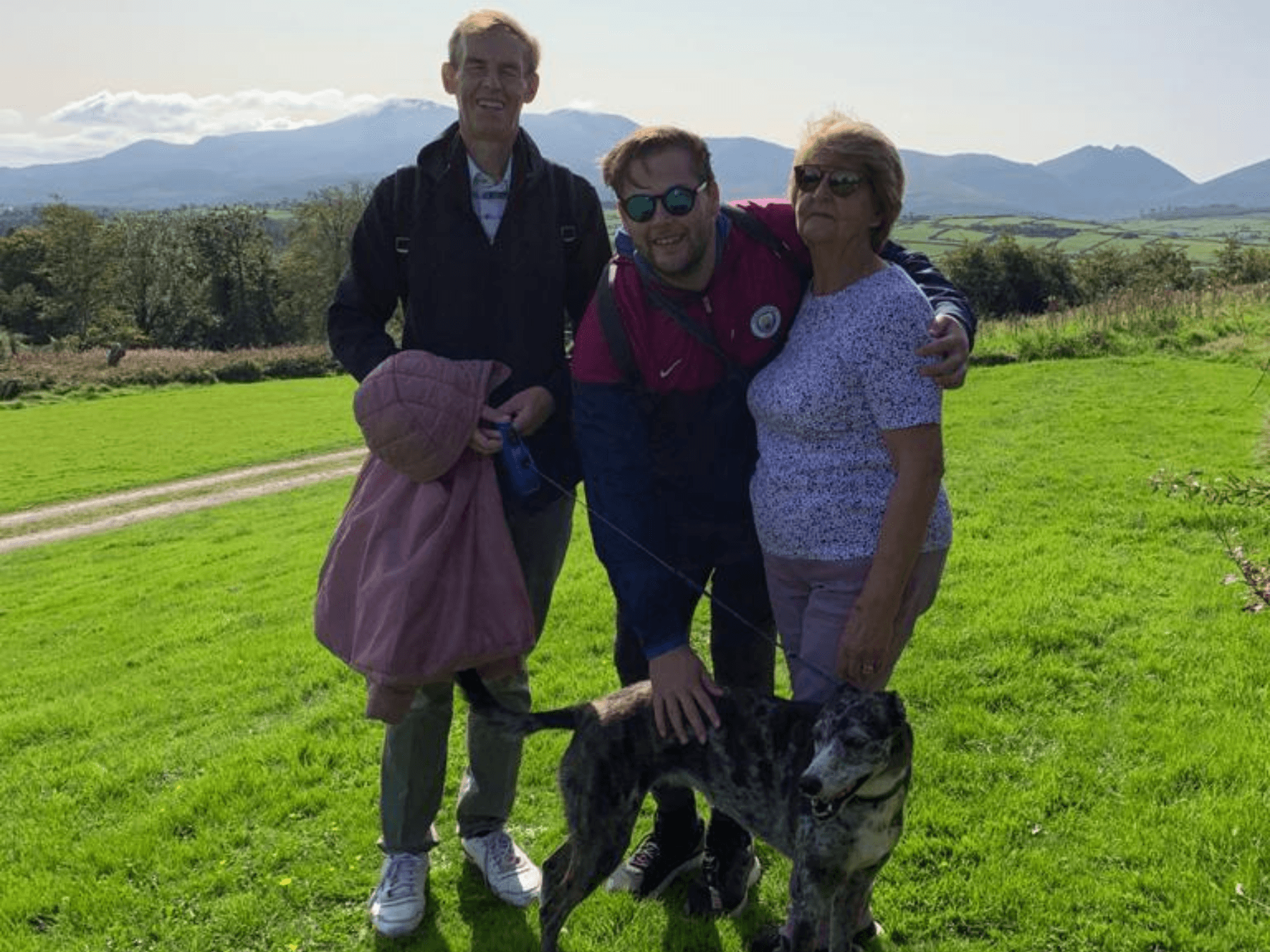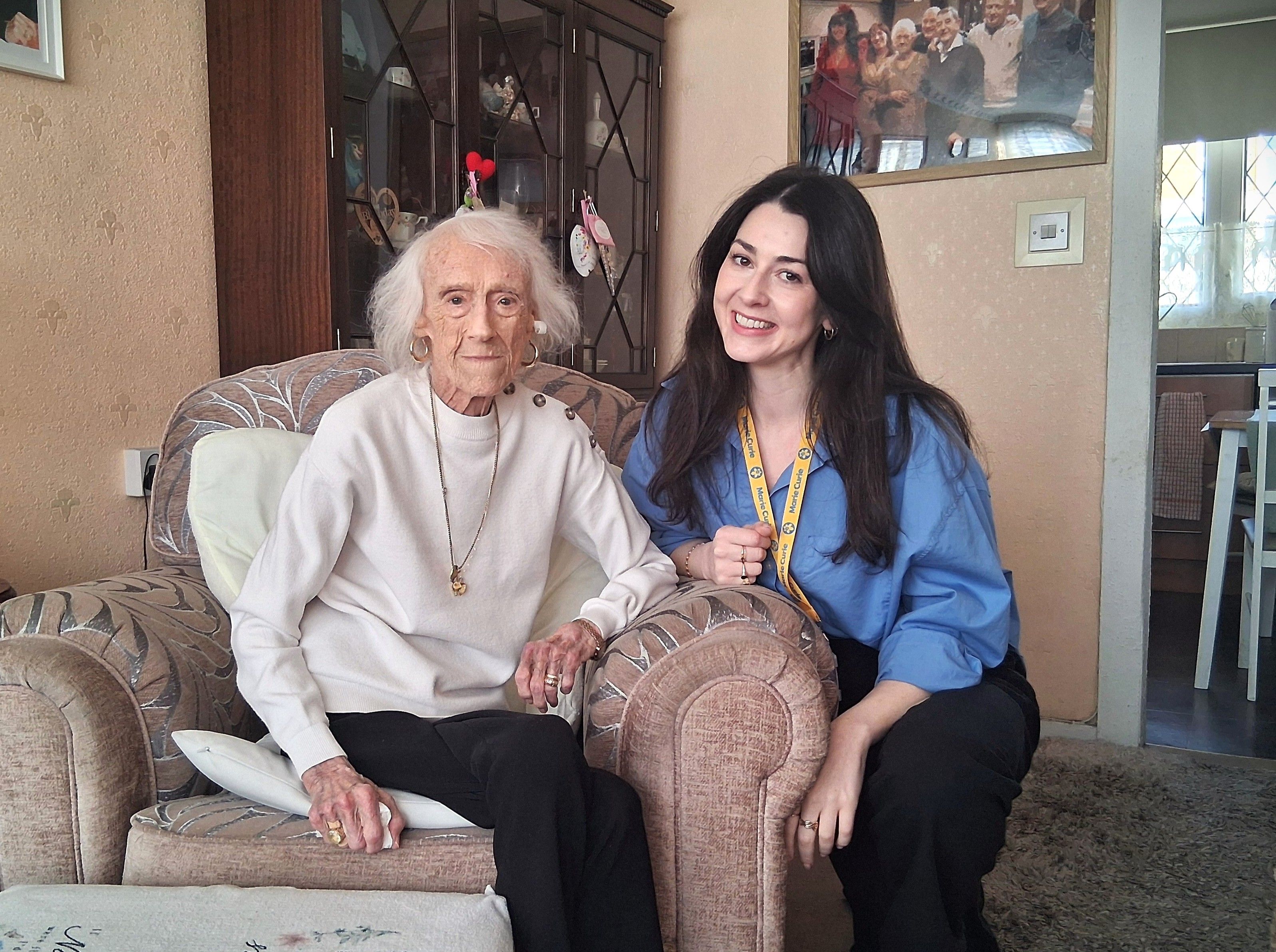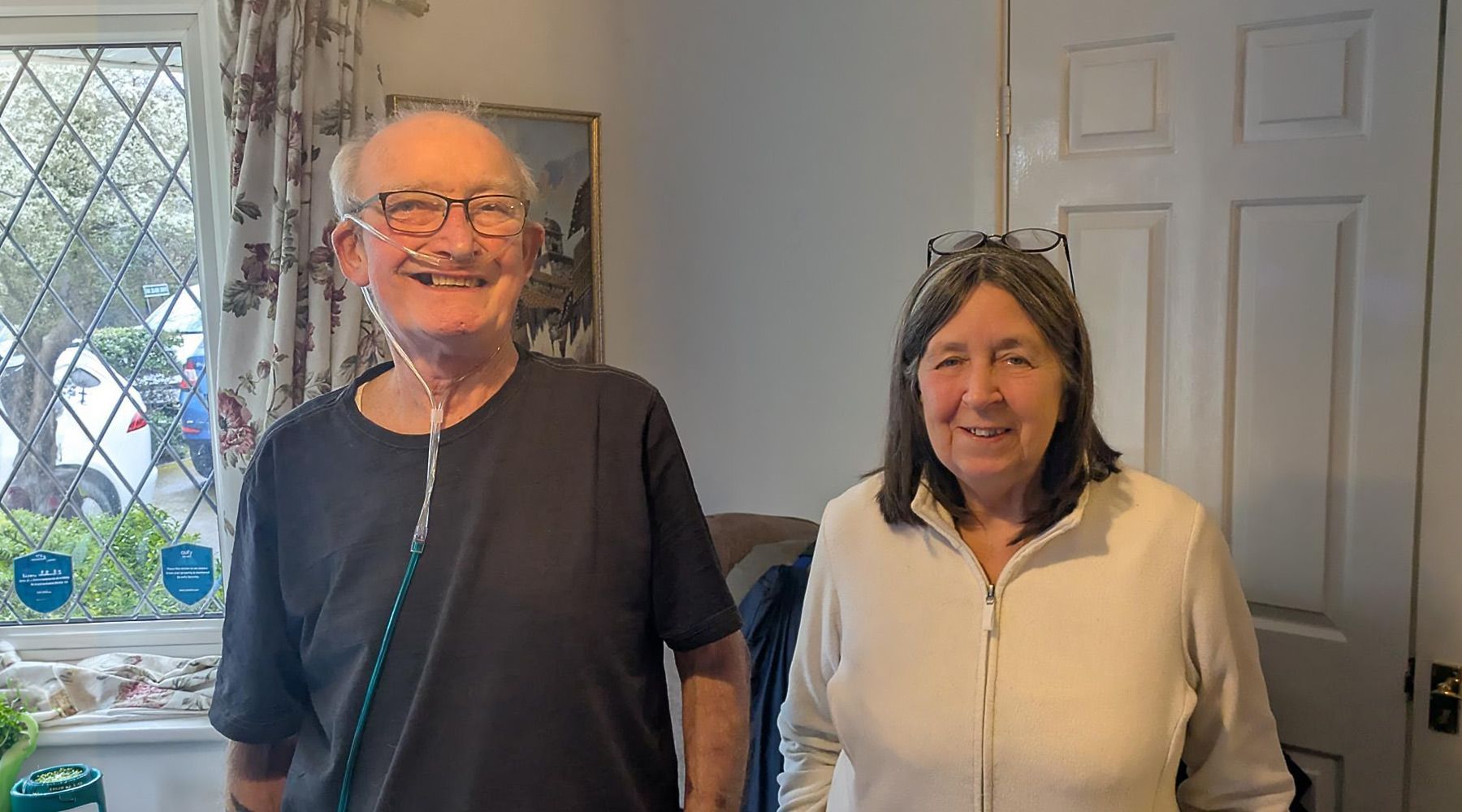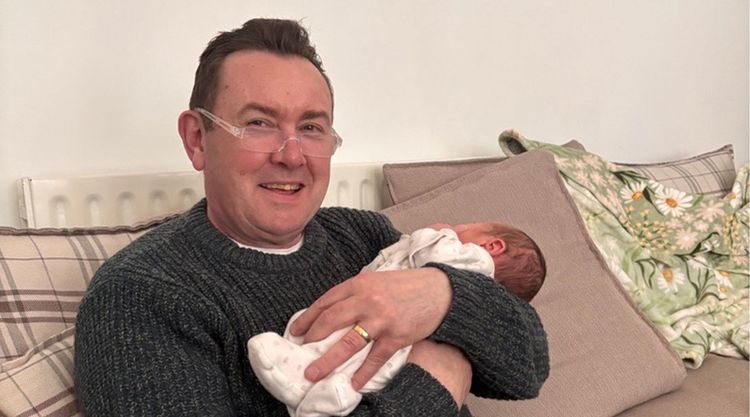
After Scott Dent-Davies’ dad, Marc, was diagnosed with Alzheimer’s, “one of those serendipitous moments” happened: a Marie Curie job came up. Today, Scott leads our Dementia Companion service in Wales. This World Alzheimer's Day, Scott tells us how his dad’s diagnosis influences his work.
“I initially thought it was aphasia”
Dad’s speech was starting to slur and he was using words in the wrong places and stuff. I was like, oh, that seems like a little bit aphasia-like.
I'll never forget it. One thing I knew about my dad was that he loved darts. We always watched the Darts World Championship at Ally Pally every Christmas. It was one of his birthdays, late 50s, so I said, ‘Oh, I'll see if I can get tickets this year.’ But when I told him, he didn't seem that excited.
When we were there, in a pub not far from the hotel, he asked me the same question a couple of times. I thought, It's just me and him. We're staying in the same hotel, he can't run off. I said to him, ‘Have you noticed you're forgetting stuff more often? And your speech sometimes, you're struggling to get your words out.’ He said, ‘Yeah, I have.’
I said, ‘I wonder if maybe it's worth going to the doctors about it when we get back?’ He did semi say yes but it was a few months after that initial conversation we went to the doctors.
He was diagnosed with aphasia-led Alzheimer's. It's where the aphasia part of it leads the Alzheimer's, whereas usually someone with Alzheimer's gets the memory part. My dad's was flipped the other way. I could see how badly it affected him. I think he’d known something was going on, but then someone had just told him. You could see it flooded over his face. I’d never seen him like that.
“I came across a job for the area dad lived in”
At that time, I was running my own fitness-based business. I kind of decided I’d had enough. I’d really enjoyed working with volunteers at Cardiff University, so I was looking up jobs with terms like ‘coordinator’, ‘volunteer’, ‘manager’. Then I came across a job like, oh, Volunteer Coordinator, those are my two words. It was a Marie Curie job for the area that my dad lived in.
It had a little tagline in it, specifically trying to develop more companionship for people with dementia and Alzheimer’s. I thought ‘I’ll go for it and see what it’s like.’ Even if I only stayed in it a couple of years I could learn more about Alzheimer's while trying to develop services in his area. And they were kind enough to let me just run with it. That's been going for – how long have I been here? Five years now.
The importance of early companionship
We built the companion service to come in early in people’s diagnosis, when they don’t need specific managed care. It’s really difficult for us to put them straight into the clinical service because we don't know if they're eligible for it. But if we put a companion in place, someone who's matched up with that person can track their progress or deterioration through weekly visit reports.
So as soon as they start needing a clinical level of support, there's no delay, there's no waiting list, there's no barrier to access. We've gone out and found those people way earlier in their journey.
“The group sessions are a great launching point”
As soon as we hit over 100 referrals for the Companion Service, I sat the coordinator down and I was like, look, we can't just let 100 people sit on that waiting list. We thought, well, we'll have to get to more people to one volunteer. And because I'd set up the dementia group up at the hospice, I thought actually, let's do that.
We’ll collect people from their homes and bring them to the community centre in Swansea. We'll be there to greet them with some companion volunteers and we'll have a set-up that's based loosely around cognitive stimulation therapy. One week might be about reminiscence. In the past, we've done smell quizzes where I've got old boot polish or lavender.
We can survey them at the beginning to see how independent they are, how vocal they are, what's their memory’s like. Then you can cross reference that with how they are after the six weeks.
And it may be that they don't engage with those activities and sit there drinking coffee and chatting. But then, why would we stop that? That’s the benefit that this particular group is getting out of it. It’s a great launching point.
“My situation with my dad advantageously crosses over with my job”
I’ve got a really advantageous situation going on with Dad, which crosses over with my job. I can sort of see things, especially with people who are further back in the journey than my dad, and maybe anticipate when things are happening. Sometimes I try and detach the two a little bit and just deal with it as a service rather than like a personal thing, reserving the personal stuff for my personal life. But I always look at recruiting Companion Volunteers and matching them with people with the thought, ‘What if this person they’re about to go out and see is my dad?’
"There are good things I attribute to the Alzheimer's"
There are nice things that come out of his Alzheimer's. Dad laughs so hard, hysterically laughs at stuff. Nobody knows what he's laughing at sometimes. He’s much softer and gentler. These are things that I would directly attribute to the Alzheimer's.
Would we have as close a relationship right now if he hadn't got it? Would I have spent this much time with him? The answer is probably not.
Get support
If you or someone close to you is living with dementia, you can get free practical and emotional support from our Support Line and Marie Curie Companion service.
We provide expert care at home and in our hospices, whatever the illness, and through the Dementia Care and Respite service in some areas in Wales – including the Dementia Companion service.