Towards the end of life, someone’s skin may feel cold, look patchy (mottled) or change colour. These changes can be a sign that someone is in their last days or hours of life. They are normal, but not everyone has them. When someone is expected to die, these changes are not usually something to worry about and do not need treatment.
On this page, we talk about what skin changes might look like, why they happen, and what you can do to help.
We know it can be upsetting to think about the end of someone’s life. You might find some of the descriptions on this page upsetting or worrying. If you have any questions or need to speak to someone, you can call our free Support Line on 0800 090 2309 or email support@mariecurie.org.uk
How we talk about skin tones
On this page, we use the words ‘lighter’ and ‘darker’ to describe skin tones. This is because we’re describing how changes may look on different skin tones. By 'lighter', we mean skin tones that are white, light brown, or other light tones. By 'darker', we mean skin tones that are dark brown, black, or other dark tones. We respect that people may use different terms to describe their skin colour.
Watch: Skin changes towards the end of lifeWatch: Skin changes towards the end of life
Nurse Michelle describes changes to someone's skin that can happen towards the end of life.
Skin turning blue or grey towards the end of life
Skin can naturally change colour towards the end of life. It might start to look blue or grey. It happens when blood is pumping round the body more slowly, or has less oxygen in it.
People with lighter skin tones might look slightly blue, especially on their hands, feet and lips.
For people with darker skin tones, blue can be harder to see. Their skin might look greyish. It may be easier to see on their lips, nose, cheeks, ears, tongue, or the inside of their mouth.
Examples of how skin turning blue or grey may appear on someone's hands
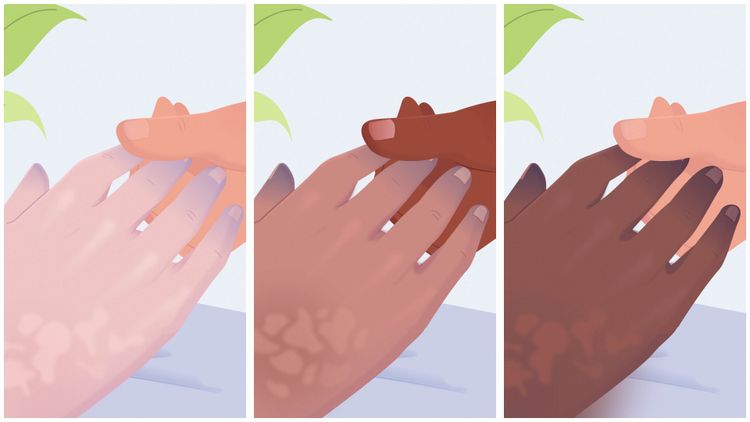
How skin turning blue or grey may appear on someone's hands and fingers
Examples of how skin turning blue or grey may appear on someone's lips and nose
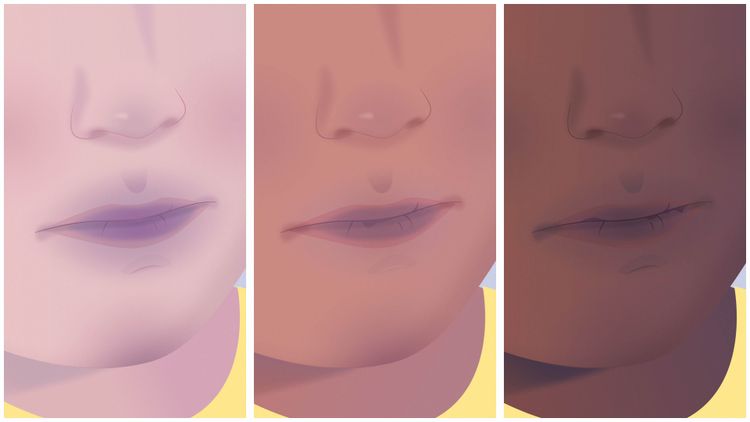
How skin turning blue or grey may appear on someone's face, lips, and nose
Mottled or patchy skin towards the end of life
Mottled skin is where someone has different coloured blotches or patches on their skin. It happens when the person’s blood circulation slows down. This is normal towards the end of life.
It usually starts on the person’s hands and feet, and can often be seen around the knees and legs. It can look like the skin has a pattern on it, with different colours. Mottled skin is not usually painful and does not usually cause the person any distress.
On lighter skin tones, mottling may make the skin look blotchy or patchy. It can look like a blue or red pattern on the skin.
On darker skin tones, mottling can be harder to see. It might look like the skin has a pattern on it that’s darker than normal, purple or brownish in colour.
Examples of how mottled skin may appear on someone's hands
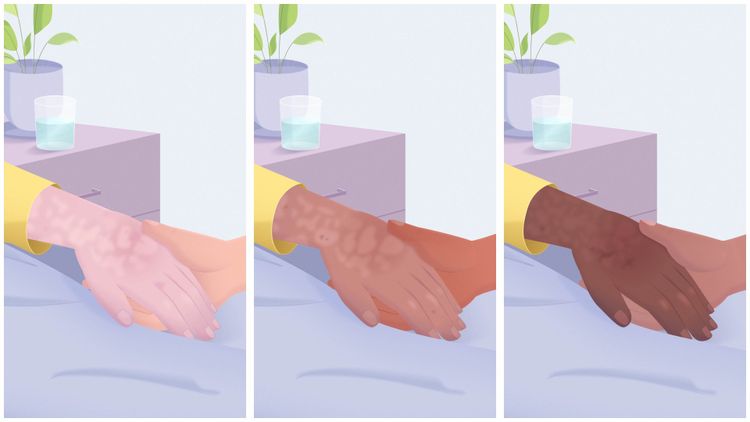
How mottled skin may appear on someone's hands
Skin feeling cold towards the end of life
In the last weeks and days of someone’s life their skin may feel cold to touch. This can especially affect their fingers, toes, ears and nose. This is because these parts of the body are harder to get blood to, as the person’s circulation slows down.
Although this can be unsettling, it is normal towards the end of life. You could use blankets, gloves or socks to help keep the person warm. Follow their lead on what seems to make them comfortable. You know the person best, so do what feels right for them.
Pressure sores at the end of life
Pressure sores can develop on areas of skin that are in contact with the bed or equipment. They can happen if someone stays in the same position for a long time. Common areas that can be sore include someone’s heels, elbows, or their bottom. But pressure sores can develop anywhere that’s bony, or has contact with a surface. For example, someone’s hips, shoulders, or the back of someone’s head.
You might hear pressure sores also called pressure ulcers, pressure damage or skin damage.
On all skin tones, pressures sores may:
- be a different temperature to the surrounding skin
- be harder or softer than the surrounding skin
- look shiny.
On lighter skin tones, pressure sores might look red or pink, or a different colour to the skin around it.
On darker skin tones, pressure sores can be harder to see. They might look darker to the surrounding skin or look shiny.
Pressure sores can be uncomfortable and may need treatment from a professional. If you see any signs of sore skin while you’re helping to care for someone, let their district nurse, GP or palliative care team know. They can help reposition the person and keep them comfortable.
Examples of how pressure sores may appear on someone's elbow
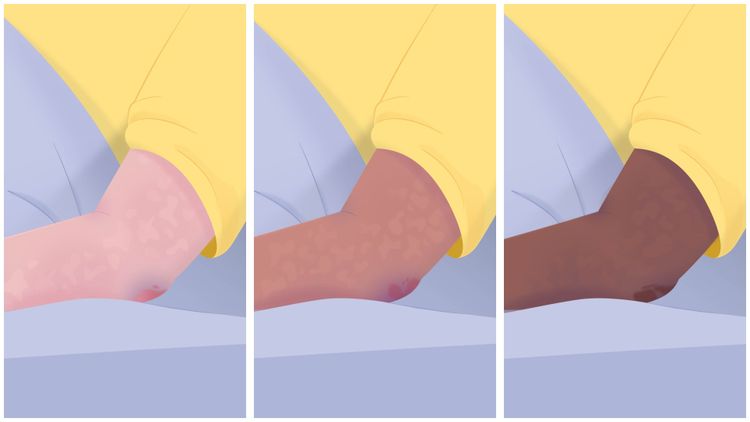
How pressure sores may appear on different skin tones

Why do changes to skin happen at the end of life?
Skin changing colour, becoming patchy or blotchy, or feeling cold is normal at the end of life. The skin is an organ, and like other organs in the body, towards the end of life it may start to slow down.
In the final days of someone’s life:
- their blood flow might get slower
- their blood pressure may go up and down
- there might be less oxygen in their blood.
These changes can make skin change colour, look mottled, or feel cold.
How to help someone feel comfortable at the end of life
Skin changing colour, becoming mottled, or feeling cold does not usually cause the person pain or distress towards the end of their life. But there are some things you could do to help keep them comfortable. Different things will work for different people. Use what you know helps the person to feel relaxed. You could try:
- holding their hand
- offering them a gentle hand or arm massage
- talking to them softly
- playing gentle music.
Getting support when someone is in the last days and hours of life
Caring for someone in their last days and hours of life can be an upsetting and difficult time. If you’d like extra support, we are here to help. Call our free Support Line on 0800 090 2309 to speak to someone about how you’re feeling. Or email support@mariecurie.org.uk
If you have any concerns about your family member or friend, speak to their doctor, nurse or care home staff.