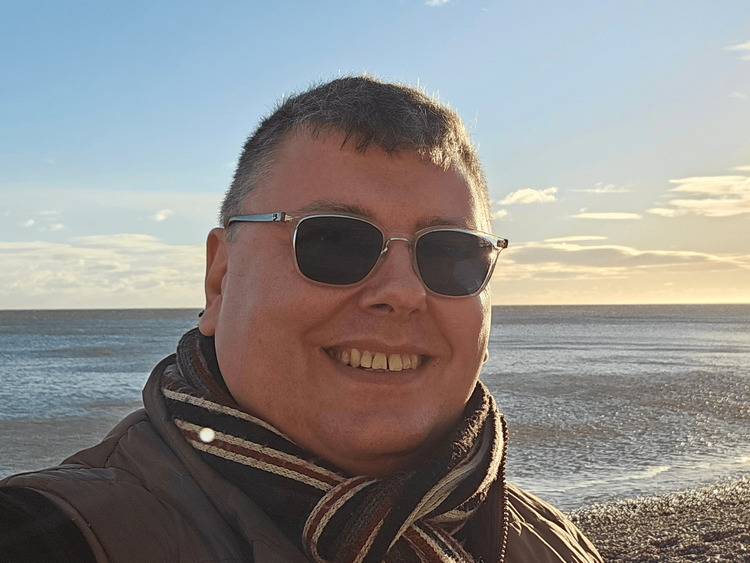
When Ty Davies lost his brother Chris, it was the latest in a series of devastating bereavements that stretched back decades.
Already living with anxiety and depression, Ty found himself overwhelmed by grief. Through Marie Curie's Wales Bereavement Service, he received counselling support that helped him process his losses, rebuild hope and look towards the future again.
Ahead of World Suicide Prevention Day, Ty is sharing his story to encourage others to ask for help when they need it.
“The grief really debilitated me”
On 14 June 2024, we found out that my brother Chris had suddenly died. I was completely lost. He was young, it was the eve of his 63rd birthday and we don't even know if he made his birthday.
Chris was my oldest brother, he was the cool one, he was very philosophical, and he was who I'd talk to when things weren't going very well for me.
I've suffered with anxiety and depression for many years now. My parents both died when I was young, and I had a number of significant deaths just before Chris, including our dog Poosh, a rescue staffie cross.
Poosh was my reason for getting out of bed some days. We all loved him so much. He died when he was 13 and it was traumatic. I thought to myself, 'be a man and get on with it', but it absolutely creased me.
In quick succession, I lost my brother-in-law through oesophageal cancer, leaving two children and his wife behind. My uncle then passed away from heart disease, and then the coup de grâce was Chris.
It got to a point last year where the grief really debilitated me. I was away with Donna and a friend of ours and I was almost unresponsive; I was smiling but empty inside.
Donna and I agreed I needed to draw a line under everything. I'm in my fifties, I don't know how long I've got left on the planet, and I want to have a more positive outlook. I wanted to fight for my mental wellbeing.
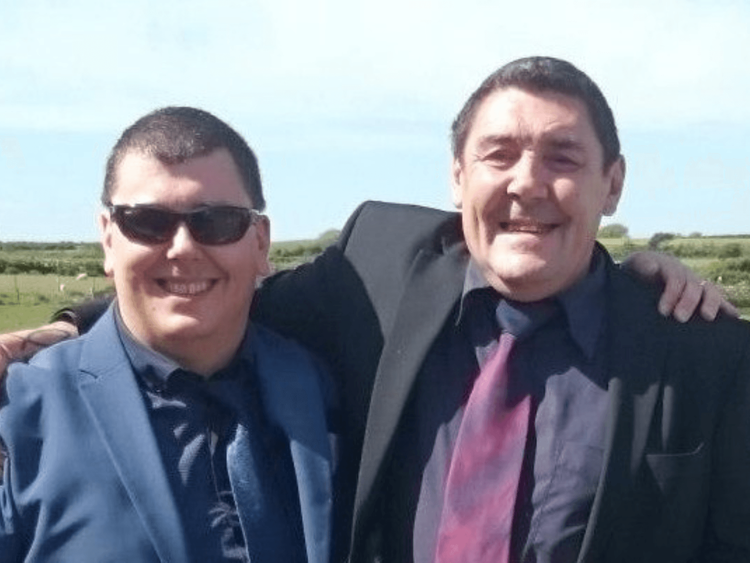
Ty and his brother, Chris
“I’ll never forget getting the call from Marie Curie”
I went to see my GP, who is amazing. He told me I could try counselling through the NHS but it wouldn't happen quickly. I was in a really bad way, so I looked online to see what was available.
I tried Marie Curie thinking that I probably wouldn't hear anything due to my assumption that it was a cancer charity.
I'll never forget being in the car park of the doctors and getting the call from Marie Curie to check what I was going through before making a referral to a counsellor called Sophie.
Marie Curie was the only organisation, aside from my GP, that came through for me, and not only that, they did so spectacularly.
I felt a bit of a fraud in getting help from Marie Curie, even though I'd lost loved ones to terminal illnesses.
Through my counselling with Sophie, I learned that Marie Curie is a broad church in helping people through grief from different causes.
"The six sessions I had were game-changing"
Sophie was remarkable. The six sessions I had with her over video call were game-changing.
Chris was the catalyst, but Sophie helped me open up about my previous bereavements, and we found that a lot of my grief hadn't been addressed. Her support accounted for all the losses I'd experienced.
My dad passed away suddenly when I was 15, which led on to a cluster of terrible events after that, and Sophie looked into the impact of all of it.
When my mum died in 2004, I had counselling but it was very superficial. It felt like it was prescriptive rather than dealing with the root issue.
Around 10 years ago, I was going through a bad time at work and I had some counselling through work for that, but again it felt very surface level.
Sophie's support, however, was real, from a place of compassion and genuine interest. We leant into theories and philosophies, we could speak at an intellectual level about recovery and renewal, but she also got to the brass tacks of the issue.
"I didn't want to be here anymore"
There were times where there was so much pain that I didn't want to be here anymore. I couldn't see a way out, but the conversations with Sophie gave me the option to progress and to look forward to things again.
I've got a new passion for life, and I see this as the second part of my life now. This is the new version of me, and the Marie Curie counselling has given me that strength.
Whatever time I've got left of my life, I'm going to enjoy it.
The grief cycle I was in had been going on since I was 15. I'm in my fifties now, and only now do I feel like it's finally been broken.
The help that I've had from Marie Curie has changed my life, really. It was only the counselling sessions I had with Sophie that changed my outlook on life for the better, while still keeping the core of who I am.
Six hours isn't huge in the grand scheme of things, but it's really made a huge difference and that just goes to show how powerful the support was.
“I want to encourage people to ask for help and not be afraid of doing that”
I am a typical Welsh bloke. I'm probably the precise demographic who don't ask for help.
We know the terrible stories of what not asking for help can cause. There are people I know who are no longer with us who might still be here if they'd asked for help.
I was suicidal. I was very much in a bad place, and I had been putting plasters on my grief wounds before actually starting to heal them with the support from Sophie.
I want to encourage people to ask for help and not be afraid of doing that. It's probably one of the hardest things anyone can do to make that call for help, but it's the strongest, most macho thing someone can do.
It's helping me to know I might be able to help other people by sharing my story and raising awareness of the Wales Bereavement Service.
The help that was given to me was not help that I expected to need, but thank God that I did.
I haven't got a debt to Marie Curie, of course. I know that the support is free, but I've made an oath now to give something back.
Last year, Ty participated in the Beat the Gower Coast Path challenge - part of Marie Curie's Beat the Trails challenge series - while raising vital funds for Marie Curie services.
Reading about death, dying and end of life can bring up a range of emotions. If anything in this story has affected you, our Support Line is here for you.
You can reach our Support Line on 0800 090 2309*. Open 8am to 6pm Monday to Friday, and 10am to 4pm Saturday to Sunday.
*Calls are free from landlines and mobile phones. Your call may be recorded for quality and training purposes.