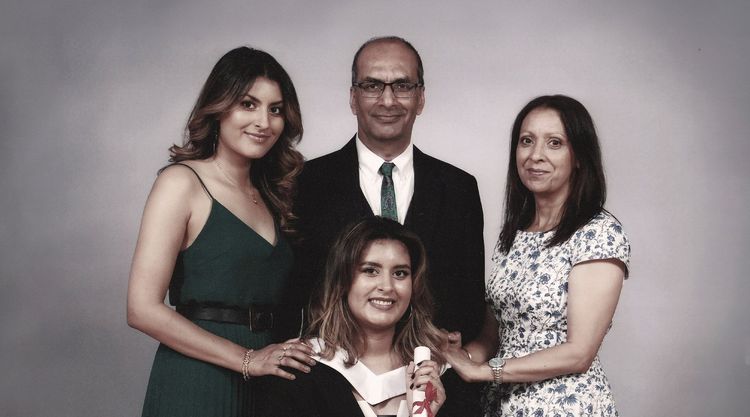
When Harmi received a life-changing diagnosis, his family did everything they could to make sure he got the care and support he needed. Sharan, Serena and Tasha share their story of Harmi's last months.
An amazing Dad
When Serena, Tasha and their mum Sharan talk about Harmi, their words paint a vivid picture of a family man who was devoted, gentle and deeply loved. “He was an amazing dad,” Serena says. “He had a full‑on job but never failed to be there for us… so many people said he was the dream dad.”
Harmi worked as a mechanical engineer at Jaguar Land Rover, but his family always came first. “He was very smart,” Tasha adds, “but he worked for us.” Outside work he was a classic DIY dad, a snooker‑night regular, a Liverpool fan, and a lover of “old and low‑budget movies.”
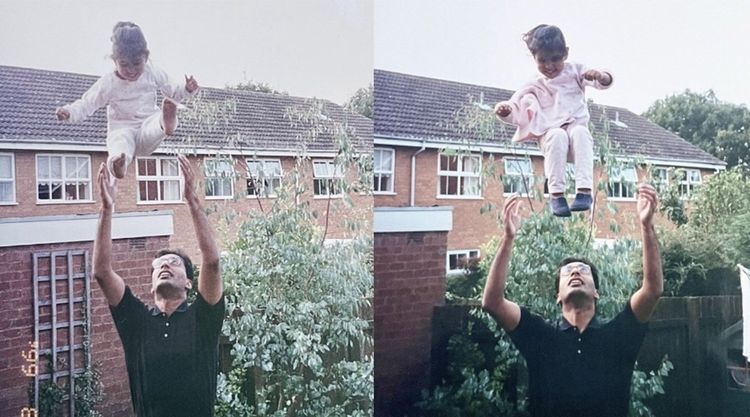
For Harmi, family always came first.
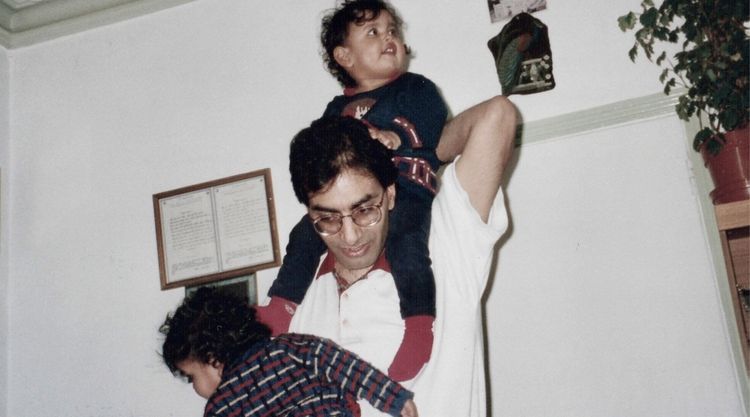
Harmi was always there for his daughters, Serena and Tasha
A difficult diagnosis
The family’s world changed in 2022. Harmi began experiencing abdominal pain – something he initially thought was a pulled muscle. His GP prescribed medication, but months passed with no improvement. “He did ask for a scan,” Serena recalls, “but the doctors kept saying to wait another month.”
Sharan’s medical background meant she quickly recognised worrying signs. After repeated tests, a doctor mentioned “cholangiocarcinoma” – a word unfamiliar to the daughters, but not to Sharan. Further research revealed Harmi had intrahepatic bile duct cancer, the least treatable type. “Out of the three, Harmi’s type was the incurable one,” Sharan says.
The family pushed for faster tests through private healthcare, and on 5 August the diagnosis was confirmed. It was Sharan and Harmi’s wedding anniversary. Harmi’s consultant warned that he would deteriorate quickly and needed specialist care.
Sadly, this is what happened. “He lost a lot of weight and became jaundiced,” Tasha says. The nights became unbearable as he struggled to climb the stairs. Tasha and Serena worked full-time while caring for him. Sharan stayed awake all night so she could keep a close eye on Harmi. “He was our superhero,” Serena says. “He’d carry us up the stairs when we were younger, so it was our turn to help him up the stairs when he needed us.”
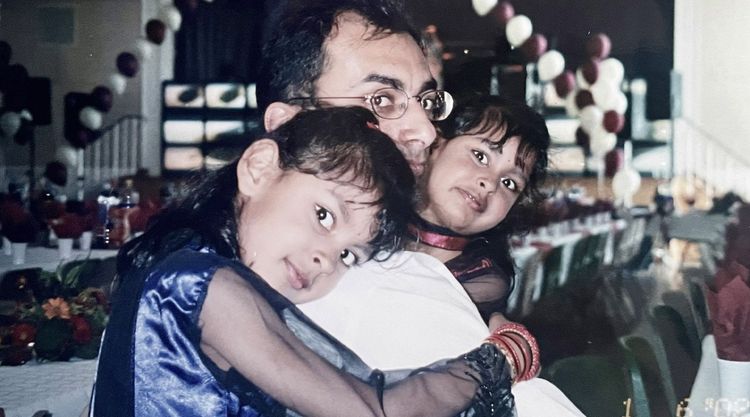
"He is our hero"
Six weeks in hospital
By mid-August, Harmi could no longer cope at home. Sharan insisted with the paramedics that he be taken to the Queen Elizabeth Hospital (QEH), rather than be admitted to a general ward elsewhere. She advised the paramedics that this was what Harmi’s private consultant had strongly advised. After a phone call to the A&E consultant at the QEH, he was admitted to their specialist liver/cancer unit.
He stayed there for six and a half weeks – including during his 60th birthday.
The period was emotionally and physically draining. Tasha recalls working full days, then spending evenings in the hospital until late at night, sometimes working until 4am. “We were in fight mode… it completely burnt me out,” she says.
Harmi, usually traditional and private, found the emotional strain overwhelming. “He cried every night when we had to leave,” Serena says. The family were also juggling the cost of travel, parking and meals – expenses that added up quickly. “We had no financial support,” Sharan says.
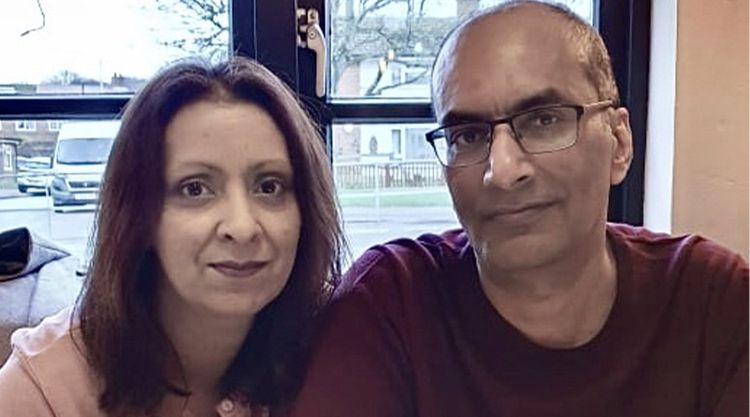
Sharan and Harmi
Treatment and hope
After returning home to regain strength, Harmi began six months of chemotherapy. He handled it with quiet resilience. “His only side effect was extreme tiredness,” Tasha explains. “He just got on with it.” But infections, outpatient appointments and constant hospital trips took their toll. Sharan estimates he had “well in excess of 100 appointments.”
Although surgery was planned, doctors soon realised the tumour couldn’t be removed without risking Harmi’s life. Hearing this devastated him, and the following months were a cycle of good days and frightening declines.
By summer 2024, it became clear his condition was worsening. The medical team halted chemotherapy and tried immunotherapy, but it offered little improvement. The emotional strain deepened when a friend Harmi had made during chemo passed away.
Still, the family tried to hold onto hope, even planning a September holiday to replace the one missed for his 60th birthday. But Harmi’s health spiralled again – and this time, fear and confusion took hold. He became very worried about being left alone or that someone might harm Sharan. “He was hallucinating… he was just a different person,” she recalls.
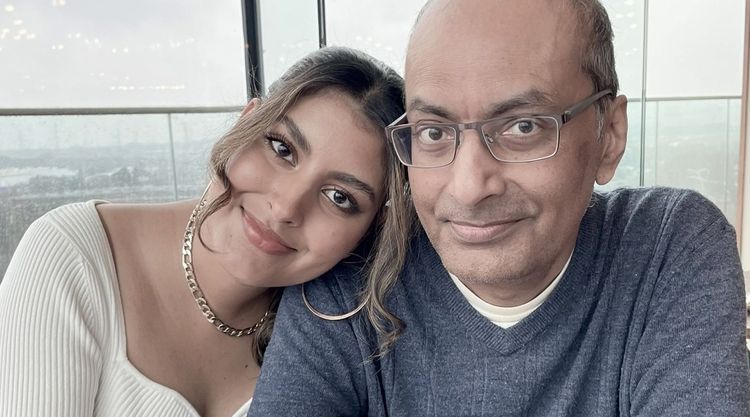
Serena and Harmi
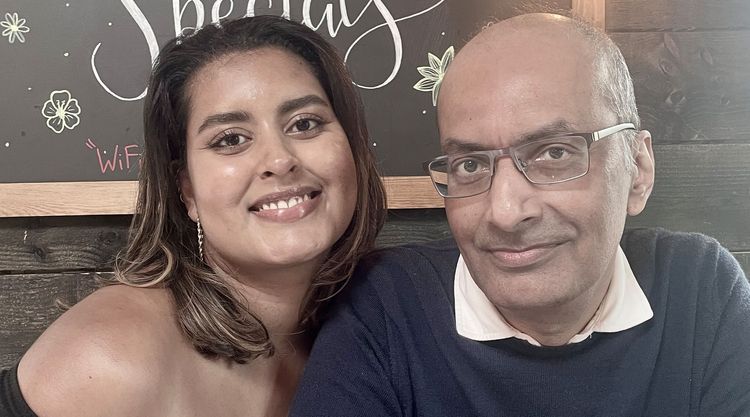
Tasha and Harmi
A place of peace: the Marie Curie Hospice
The family didn’t want Harmi to pass away at home. But convincing him to go to the hospice was incredibly hard. “I think he thought the hospice would be like the hospital all over again,” says Sharan, “He also thought we’d need to pay for him to be looked after there.” A Marie Curie Nurse, Carol, gently guided them through. Eventually, after a GP spent 45 minutes trying to reassure him, Harmi agreed.
From the moment they arrived, everything changed. “When we got to the hospice, I could see on Dad’s face that he realised it was different to the hospital,” says Tasha. “It was a relief. We had the opportunity to be his daughters again rather than his carers.”
Sharan remembers the staff saying, “We will do all of this now, you just sit and be with him.”
The hospice offered quiet, calm, dignity – and small moments of joy. Serena loved wheeling her dad to a jigsaw puzzle at night. Tasha remembers cooked breakfasts in the café. “Looking back, it was so nice to have those last moments with him,” she says. The family felt valued, not just as visitors but as people who mattered.
Harmi’s final day
On the evening of 15 October, something told Sharan to stay overnight. This was the first time she stopped overnight in Harmi’s room. The next morning, as she prepared to nip home for a shower at 5.30am, she told nurses in the room that she would be back later on that morning and noticed Harmi reaching out his right arm. “People say this happens when a dying person is reaching out to the other side, or loved ones already on the other side are reaching out to the dying person.” she reflects.
Harmi passed away peacefully around 8.30am, with one of the lovely nurses, Maxine, who was holding his hand. Serena believes he waited until he was alone because “he didn’t want us three to see him die.”
Their final memory is of him lying peacefully with his window looking out into the garden.
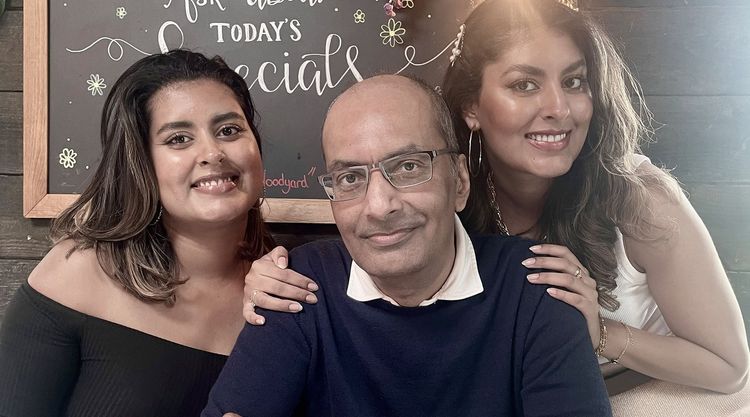
Harmi with his two daughters, Tasha and Serena
Finding support after loss
The hospice continued to support the family long after Harmi’s death. Tasha and Serena attend the weekly art therapy group, a place where they feel safe, creative and understood. “I honestly look forward to it every Monday,” Tasha says. “It sets me up for the week.”
Sharan finds comfort in jigsaws, a quiet moment to switch off. “It helps us feel closer to him,” Tasha says of being back at the hospice. “A horrible situation turned beautiful.”
Honouring Harmi’s legacy
In Harmi’s memory, the family has raised over £8,500 for Marie Curie. “And we didn’t raise it,” Serena says. “Dad raised it. He was our hero.” Their goal is £10,000 – enough to fund the hospice for a day.
For Sharan, Serena and Tasha, it’s a way to give back to the place that gave Harmi, and them, peace.
Harmi’s family are raising money for the Marie Curie Hospice, West Midlands. If you’d like to make a donation, visit their JustGiving page.