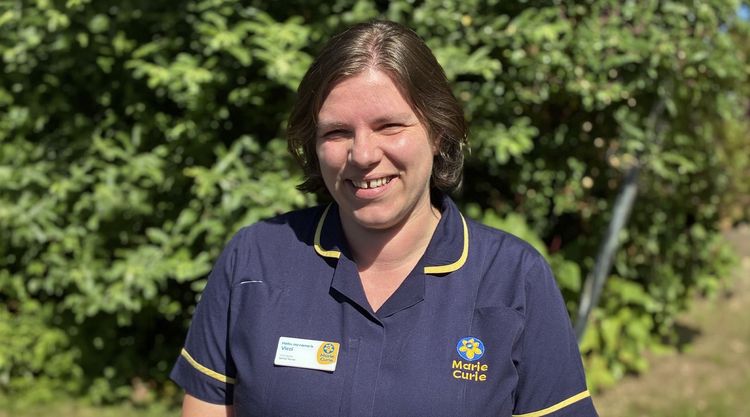
Marie Curie Clinical Nurse Specialist, Vicci Spires, is part of the Bradford Early Identification and Advance Care Planning (ACP) pilot. She told us how her new GP-based service helps to reach people who would otherwise miss out on palliative care.
I work with Advance Care Planning, looking at increasing quality of life in the last years. I help document people’s choices – do you want to go to hospital? Do you not want to go to hospital? Or anything in between.
I work full-time and I've got a Healthcare Assistant who is part-time and we are based in one GP practice. It has been interesting setting up a new service, but it is really rewarding.
Many of my patients are from deprived areas, with barriers to accessing healthcare. Patients tell me that they struggle to get to the GP… can't physically get there, or they can’t read leaflets or the instructions on prescriptions. I’m seeing patients who believe they have no choice of healthcare. People say: “I've never had anyone ask me what I want before”. There is a lot of mistrust in the healthcare system.
The biggest thing I've encountered
I’ve found most people do have ideas about what they want – about their funeral plan, about their resuscitation wishes, it’s just no one's ever asked them before, and they don’t know what to do with that information.
People are wanting to take part, and GPs are wanting to deliver for patients. Without this service, many patients I've supported could be hard to identify until they are seriously ill in A&E.
I am passionate about advocating for advance care planning
Advance care planning conversations don't get any easier when people are stressed or poorly or in hospital. It's massive for me – to discuss these crucial questions earlier when everyone has the time and the ability to think about it.
I do talk about death – where people would want to die, things that might happen in the future in terms of the progression of their disease. Helping explain the stages of their disease and what to expect in the future.
I also help people think about funeral planning. This is not morbid or depressing and a lot of people have already thought about this. When their disease progresses, the family or nurse has the information about their wishes.
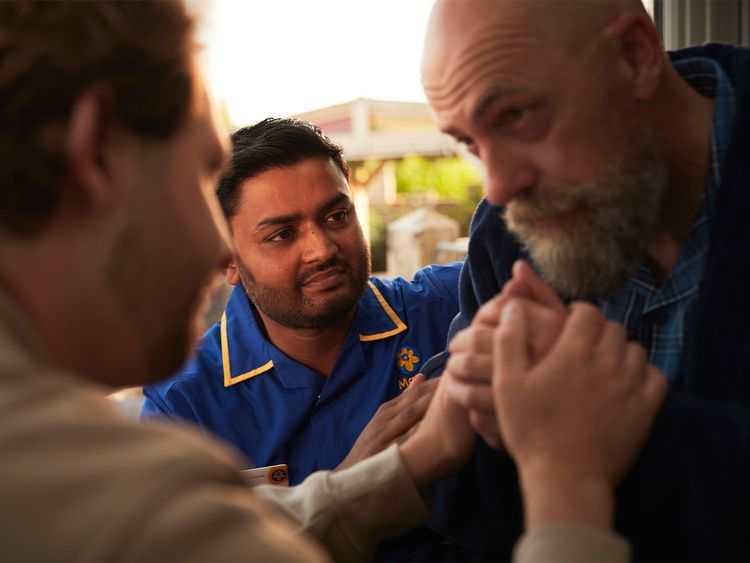
Knowing what to expect can help people put advanced care plans in place
How I connect with patients
I use the Early Identification Toolkit, an NHS system tool that identifies patients on a GP practice’s patients list – people that might have life-long or terminal conditions... who haven't got Respect forms (Recommended Summary Plan for Emergency Care and Treatment), or that haven't had advance care plan conversations.
Many people I see have progressive diseases, who haven't been identified as possibly being in the last few years. I could be their first point of contact with any form of palliative care or support.
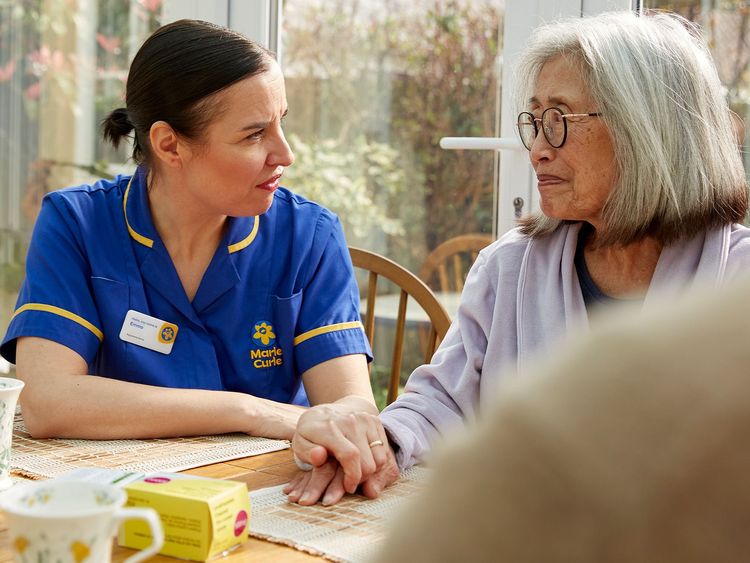
Home visits are all part of the service and help put people more at ease
I increasingly want to ensure people with long term conditions don’t get missed
Cancer gets a lot of focus; there’s a lot of information out there. For people with Chronic Obstructive Pulmonary Disease (COPD), heart failure, and other long-term conditions, it's harder to find information.
Many just think that a poor quality of life is an inevitability. I think it's a missed opportunity that we don't have conversations with some people, to support them often until it is too late. That's what drew me to this role.
Their reactions help start a conversation
Some people immediately hear Marie Curie and think cancer, and I reassure them that Marie Curie is not just cancer support, we are here whatever the illness. I book visits a few days in advance, I don't let people hang on, waiting and worrying as to why I have contacted them.
Once they've met me, in their own homes, and I describe exactly what it is that I do, most people are happy to do some kind of planning. They don't necessarily want to do everything immediately, but it certainly starts a conversation.
The reaction from this GP practice is amazing
They understand that what I’m doing is helping them – it's saving them time. The GPs are more open because I'm here in their practise, they are much more likely to ask a question about palliative care options.
Once I've completed my current GP practice’s list I’ll move to another practice and start again. We have two other practices lined up. I will probably be with them until the end of the pilot in September 2027. As pilot projects go, it is tiny but already making a difference in people’s lives. Hopefully the service carries on with long-term funding in place.
These services are popping up in different areas
I think Marie Curie is genuinely innovative. I've been given enough freedom to make this pilot work. The fact that Marie Curie is making brave choices and trying new things, I think that's amazing. And it’s really empowering.
Marie Curie has similar services starting in Barnsley, in Rotherham, there's Derbyshire, London… so they are popping up all over the place. We've got lots of little areas of innovation and excellence, helping patients in new ways, where they need it most, local to them.
We are already seeing some good come out of it. Some genuine change.
Get information and support
If you'd like practical information on our services or if you need emotional support, we're here for you. Call our friendly team at the Support Line on 0800 090 2309*.
All rights reserved. Contact stories@mariecurie.org.uk for more information.