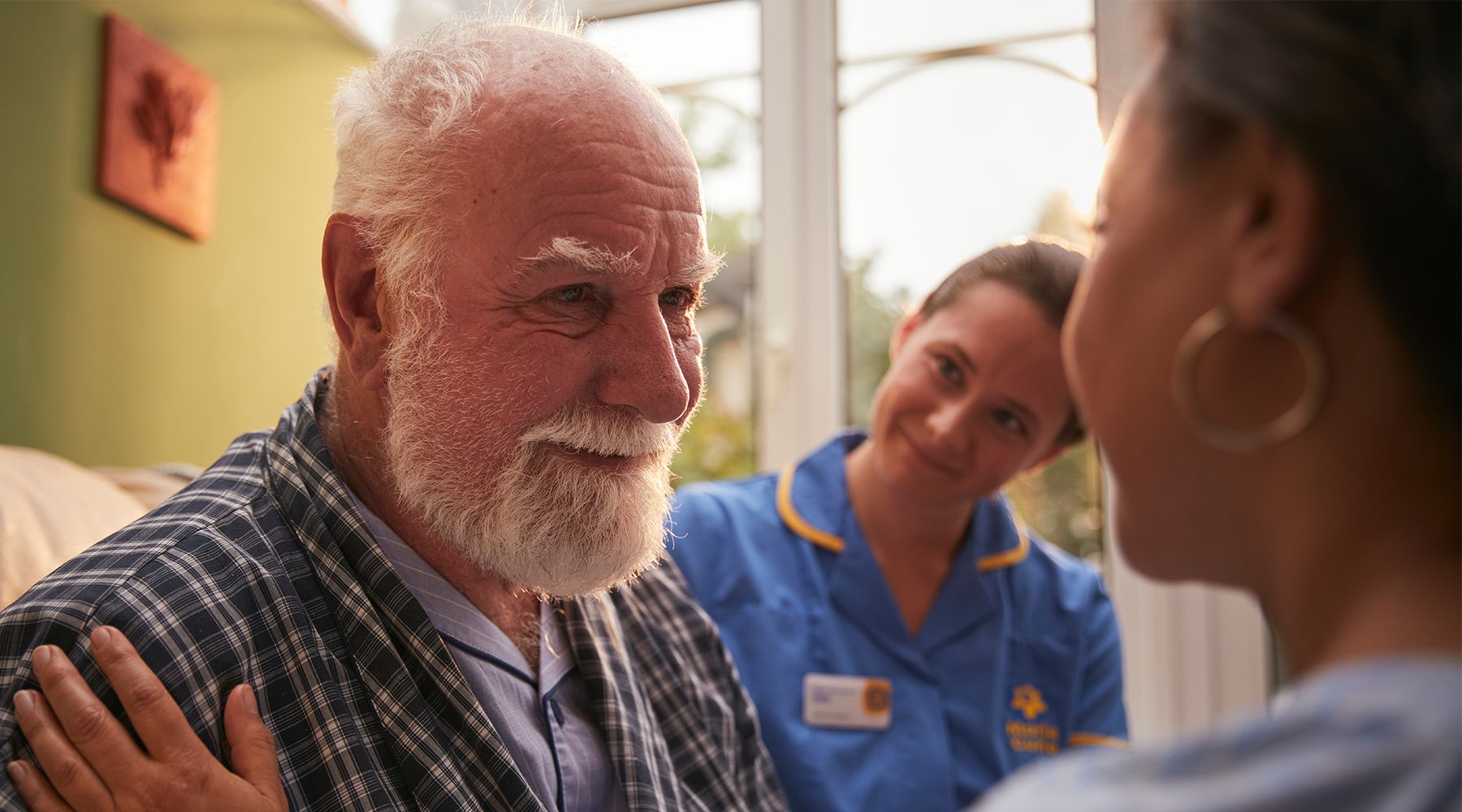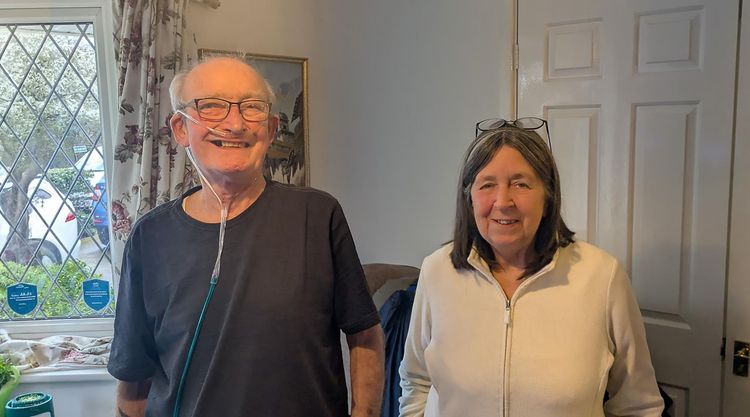
When David was offered palliative care to help with his Chronic Obstructive Pulmonary Disease (COPD), he was unsure: “My vision of palliative care was lying in a hospital bed”. But soon, it was palliative care that was helping David get out of bed. Here, David and his wife Mary share their story of care and support.
“Nothing can compete with those days”
“I originally wanted to be a cook in the Royal Navy,” explains 76-year-old David. “I took the entrance exam aged 14. I passed and was told I could be an electrician. I joined when I left school at 15, in October 1964. Then somehow or other I ended up as an aircraft engineer.”
“At 15 I was climbing 100 ft masts on the parade ground at HMS St. Vincent in Gosport. I earned my sailing coxswain badge, and at 17 I was stationed at RNAS Lossiemouth to embark onto the aircraft carrier HMS Eagle. That was a very exciting two years on board the UK’s largest ship. Nothing can compete with those days. After eight years of service, I left the Royal Navy for civil life.”
“We have two children,” adds Mary, David’s wife of 50 years, “and we brought up our grandson. I worked in admin then gave piano lessons from home, but I gave that up a few years ago.”
Unwelcome news
After retiring in 2015, an even bigger change came in 2020/21. David was diagnosed with COPD and a heart problem. “Then they found the cancer,” he says. “I ended up being rushed into hospital for heart surgery but because I had lung cancer, they said they wouldn’t do the heart op. I had radiotherapy for cancer and within a week or two I was in Coventry having a heart valve done.”
“He was on oxygen all the time – that’s the COPD,” explains Mary. “And the treatment for the lung cancer – the radiotherapy – also scars the lungs.”
“At times,” says David, “things would go downhill rapidly.”
“We didn’t have any support”
“They sent him home on 23 December. He was just on a bed in the living room,” Mary says. “We all thought he was nearly gone. Our older son and all his family didn’t know whether to cancel their holiday. They all went home in tears because they thought this was it, they said goodbye and everything.”
“We couldn’t get the doctors to come out and do anything. He didn’t eat or drink. I kept phoning the hospital and they said, ‘phone the GP’, so I kept phoning the GP and they said, ‘phone the hospital’.”
Initially, that support was just a list of phone numbers. “We were given paperwork with phone numbers on it, but you’re not actually guided by anybody,” David explains. “There’s nobody sitting here saying, ‘This is what we can offer you.’”
“A lot of people must have a misconception of palliative care”
David’s brother had died, aged just 49, in a hospice. It was an experience that shaped David’s concept of palliative care. “He was in there for quite some time lying in a hospital bed. I thought, I’m not going to lie in a bed like my brother did for goodness knows how long.”
But when the doctors explained what palliative care actually was, David gave it a go. “They explained it to me and I said, ‘Well, let’s give it a try.’”
“A lot of people must have the misconception of what palliative care is,” says David. That’s when things changed for him. “It went brilliantly from there.”
“Before Marie Curie came, I hadn’t moved in six months.”
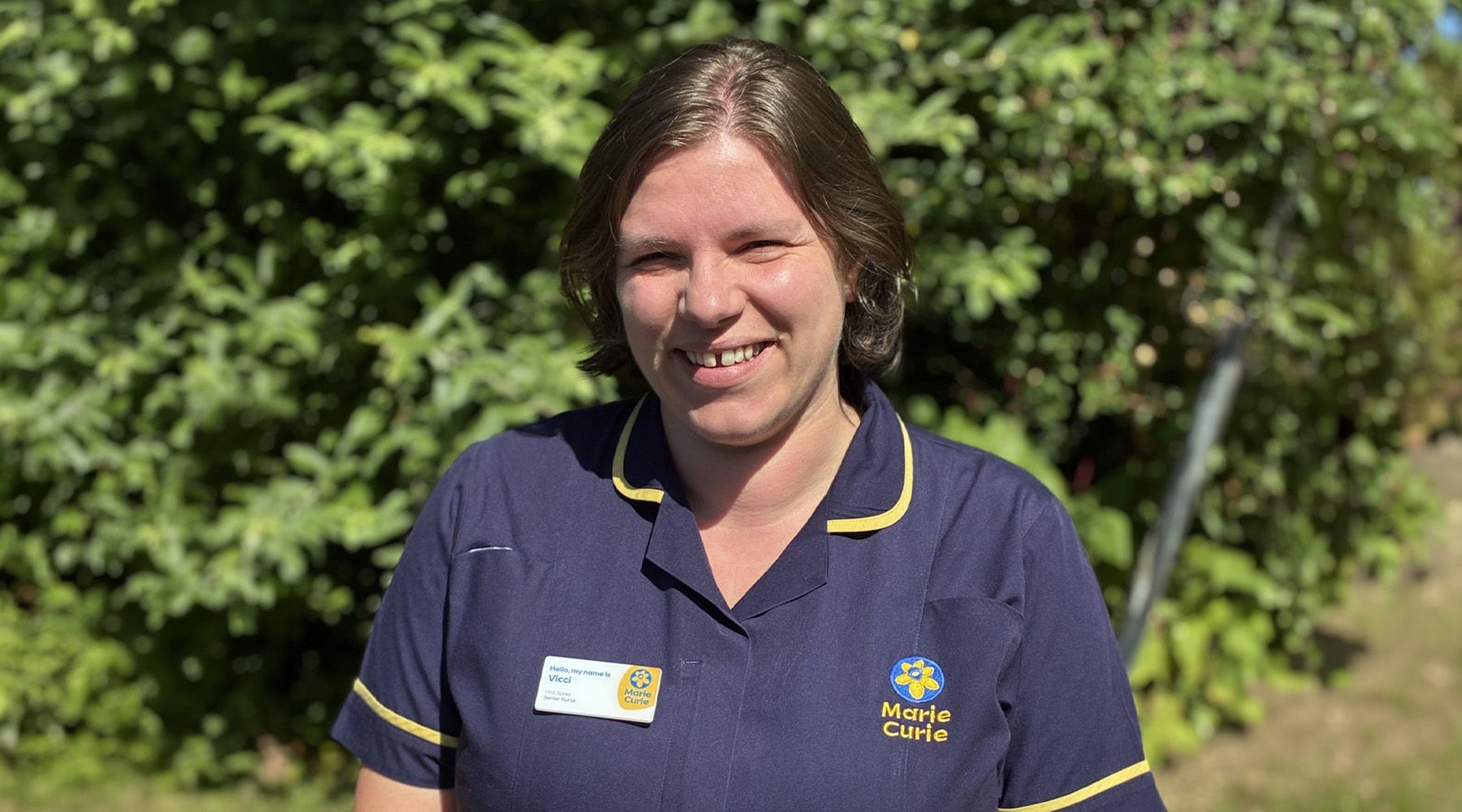
“I couldn’t get up the stairs before Marie Curie came. I was having to wash with a bowl downstairs. What I hadn’t realised was what Michelle, the Marie Curie Nurse, explained to me: when you’re ill like that, your head goes into a different mode of thinking without you even realising it.” “He just thought he couldn’t do it,” says Mary.
But soon, David wasn’t just up and about – he was exceeding his own expectations. “They got him to the end of the first car on the drive, and then they got him just a little further every time,” Mary says.
“They eventually got him up round the bend. Once they got him walking, they left him to himself, and we would contact them if he went downhill. He goes further now. He goes marching off. To get him doing all that, it’s incredible.”
“I just walked in normally”
And David didn’t stop at the bend of the road. Now, David and Mary attend a horticultural course at the Marie Curie Hospice, West Midlands. “The first day, Michelle hadn’t seen me for quite some time. She looked up and saw me. I’ll never forget it. She said, ‘That’s not you, David, is it? I cannot believe it!’ Because I just walked in normally. I said ‘Yeah, it’s great!’”
“The horticulture course is good for carers too,” Mary says. “It’s not only for the person who’s ill. You’re just chatting away while you’re planting seeds and making bird feeders. It all helps, because it gets him out the house. I like gardening too, so it was fun for me.”
“Now I have a purpose”
“You don’t realise that you’ve given up, mentally. It takes somebody on the outside to recognise you’ve got into that mode. Before Marie Curie came, I feel that I had given up on life. Now I have a purpose for whatever time I have left with my family.”
“When David came out of hospital with no support, I didn’t know what to do,” says Mary. “It was frightening. But since Marie Curie became involved, it’s made a huge difference to my life.”
“Mary knows now that she can pick up the phone and leave a message, and they have a fast-track number for the doctors,” says David. “That’s another function that Marie Curie do without even realising: they take that stress away.”
For help with breathlessness, support for carers or for any care and support if you’re living with a terminal illness or close to someone who is, we’re here for you.
All rights reserved. Contact stories@mariecurie.org.uk for more information.