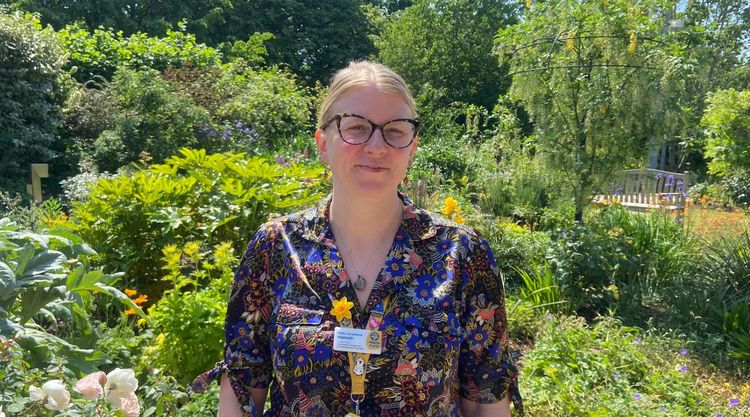
As Community Engagement and Development Manager for Marie Curie in the Midlands, Hannah spends her time understanding who we’re reaching, and who we’re not. She works alongside communities to understand their experiences and remove the barriers that stop people accessing end of life care, and that always starts with listening.
We show up in places people already feel comfortable
At Marie Curie, I work with partners, colleagues and communities to make end of life care easier for everyone to access and understand, helping us reach groups who may never otherwise connect with hospice care services. My team focuses on building relationships and sharing information in familiar spaces, such as libraries, community centres and places of worship, particularly in areas where people may be less likely to connect with Marie Curie support. By listening and building relationships, I learn what matters to people and what would help them feel confident seeking support. When we work with communities rather than make decisions for them, end of life care feels more relevant and easier to reach.
Three moments that show how we’re listening across the Midlands
Listening to people with learning disabilities
Local research showed us that only four percent of people with learning disabilities in Birmingham and Solihull access palliative care. Many may never meet someone from Marie Curie, know what a hospice is, or feel that it’s a place for them.
After hearing that people wanted guidance with planning for the future, including end of life care and funeral wishes, we partnered with a local advocacy organisation to coproduce a programme. This organisation now runs monthly wellbeing group sessions at one of Marie Curie’s hospices, helping people feel safe and welcome in a space they may not have reached before.
Some wellbeing group members also worked with Marie Curie to develop more accessible resources, with information that feels clear and reassuring. And our clinical team delivered training for learning disability support workers on what to expect at the end of someone’s life, building confidence and community resilience around death, dying and bereavement.
See our co-produced, easy-read resources
Creating space for honest conversations
Communities told us they often don’t get the chance to talk about – or may avoid – conversations about end of life, including death, dying, bereavement. Research we commissioned through Lab4Living gave us deeper insight: the conversations people want are often connected to living, including their values, identity and priorities. Together, our findings showed that people would benefit from comfortable, trusted spaces to talk about topics around life and death.
To meet this need, we’ve created Life Cafés – safe, familiar spaces led by our Community Engagement team for honest conversations about life, death and future wishes. We support the sessions with a toolkit of conversation cards, activities and prompts that help people explore what matters to them.
Recently, we worked with a local community partner to deliver a Life Café session for their South Asian social group in Solihull, in a comfortable, familiar environment. The session opened up conversations around family, culture, future wishes and what matters most to people, and helped increase the group’s confidence in discussing end of life.
Life Café sessions also help us understand communities more deeply. They show what good and poor care looks like to people, highlight barriers such as information not being culturally appropriate, and show the strengths and networks people rely on. These reflections can guide how we can show up across the Midlands and support more inclusive end of life care.
Making information on end of life care easier to find in everyday places
When our community engagement team worked with local communities, people told us it isn’t always easy to get information from a hospice building, and that r relying on the internet isn’t possible for everyone because digital access and confidence vary widely. We also heard that for terminally ill people and their families, finding clear, timely information can be difficult when they’re dealing with emotional stress, complex guidance, fragmented services and limited awareness of the support available.
To respond to what people told us, we’ve been placing Marie Curie resources in libraries, family hubs, universities and other trusted spaces. Meeting people where they already feel comfortable helps them find support earlier, without needing to travel or go online.
Library and community staff have told us how valuable these resources are in practice. One library manager said:
“It’s so important for people to be able to come into a library and find free Marie Curie resources to take away. The leaflets and booklets are so well used, and the Easy Read booklets are particularly popular.”
What we’re focusing on next
We’re focusing on the communities we’re still not reaching, working with local organisations to coproduce accessible materials and expand Life Café conversations. Every workshop and outreach event helps us understand what supports people and what needs to change.
Too many people still face the end of life without the care, clarity or comfort they deserve. Listening to communities and acting on what they tell us is how we can help close that gap, making hospice and end of life care feel relevant and accessible for everyone.
My advice for hospice professionals
For hospice teams who want to build outreach or connect with a wider mix of people in their community, here are some principles that guide my work:
- Take time to listen first: The most meaningful opportunities come from simple, human conversations. Understanding what matters to people should always come before offering solutions.
- Be where people already are: Familiar community spaces make conversations feel more natural and reduce the pressure people can feel around hospice care.
- Connect people: Often our role is to bring people, groups and services together rather than provide all the answers ourselves.
- Value lived experience: Local insight shapes approaches that are more relevant, trusted and culturally appropriate.
- Start small and stay curious: A single conversation or pilot activity can grow into something much bigger.