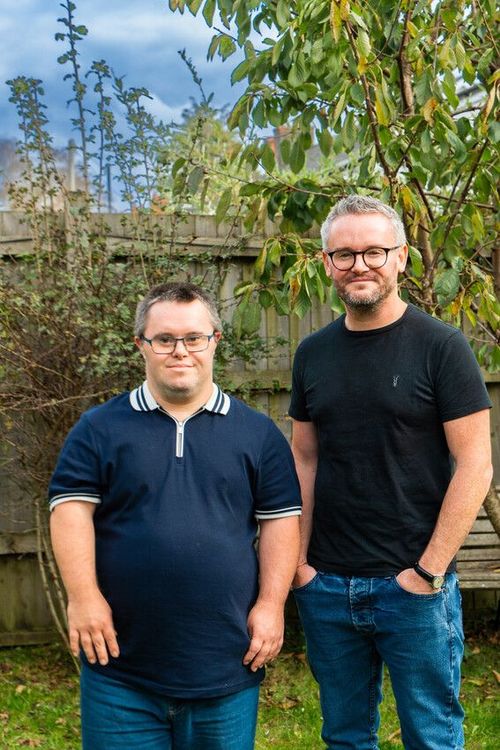
Harry and Sam share their story of family bonds, loss and grief after terminal illness, and how open conversations and honesty have helped them navigate a difficult time.
We’re a close-knit family and strong support network
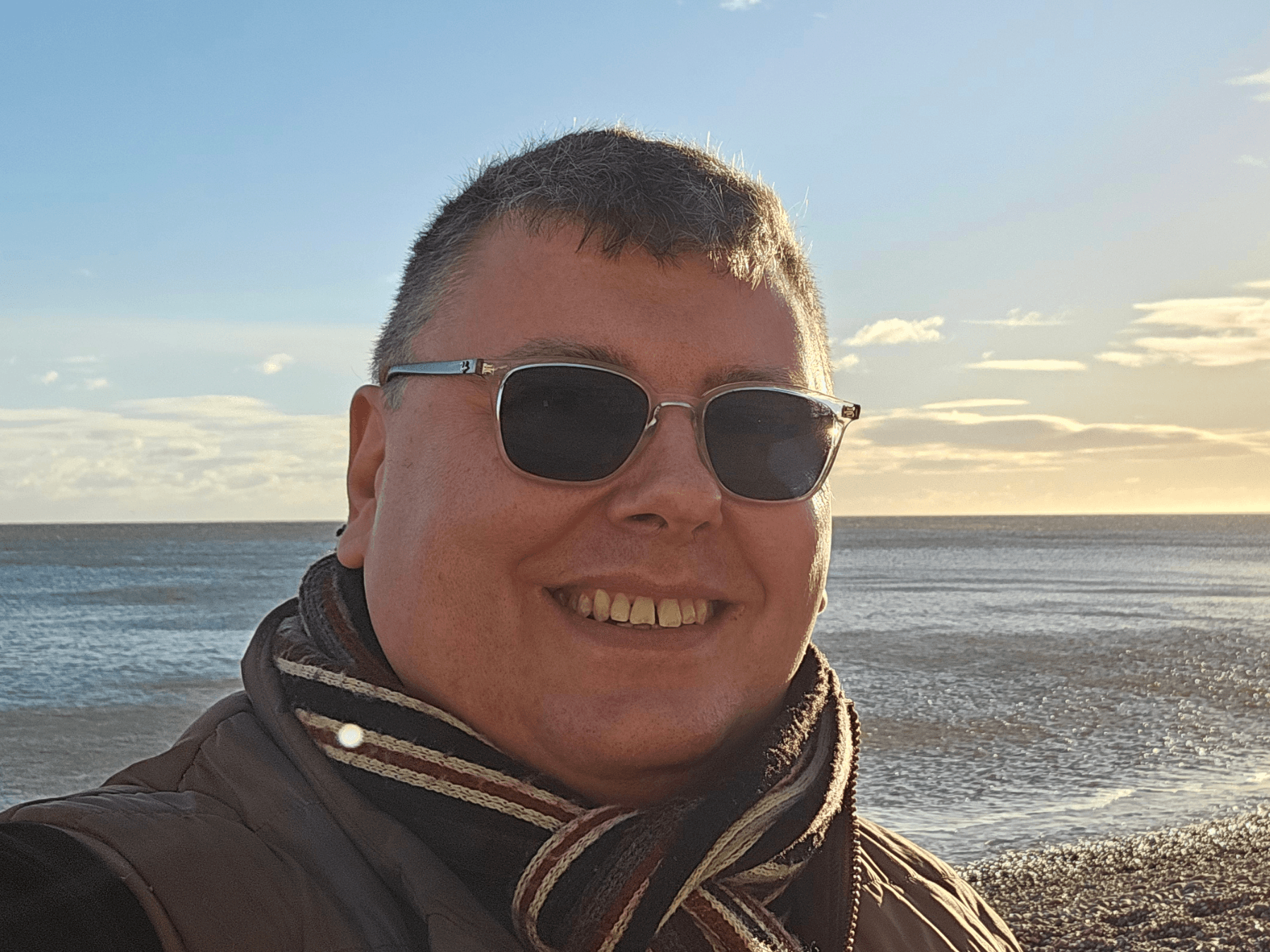
Sam: Hi, I’m Sam. I work as a nurse, which I really love, and I’m a proud dad to my 10‑year‑old son. I enjoy gardening and getting to the beach – they’re some of my favourite ways to relax.
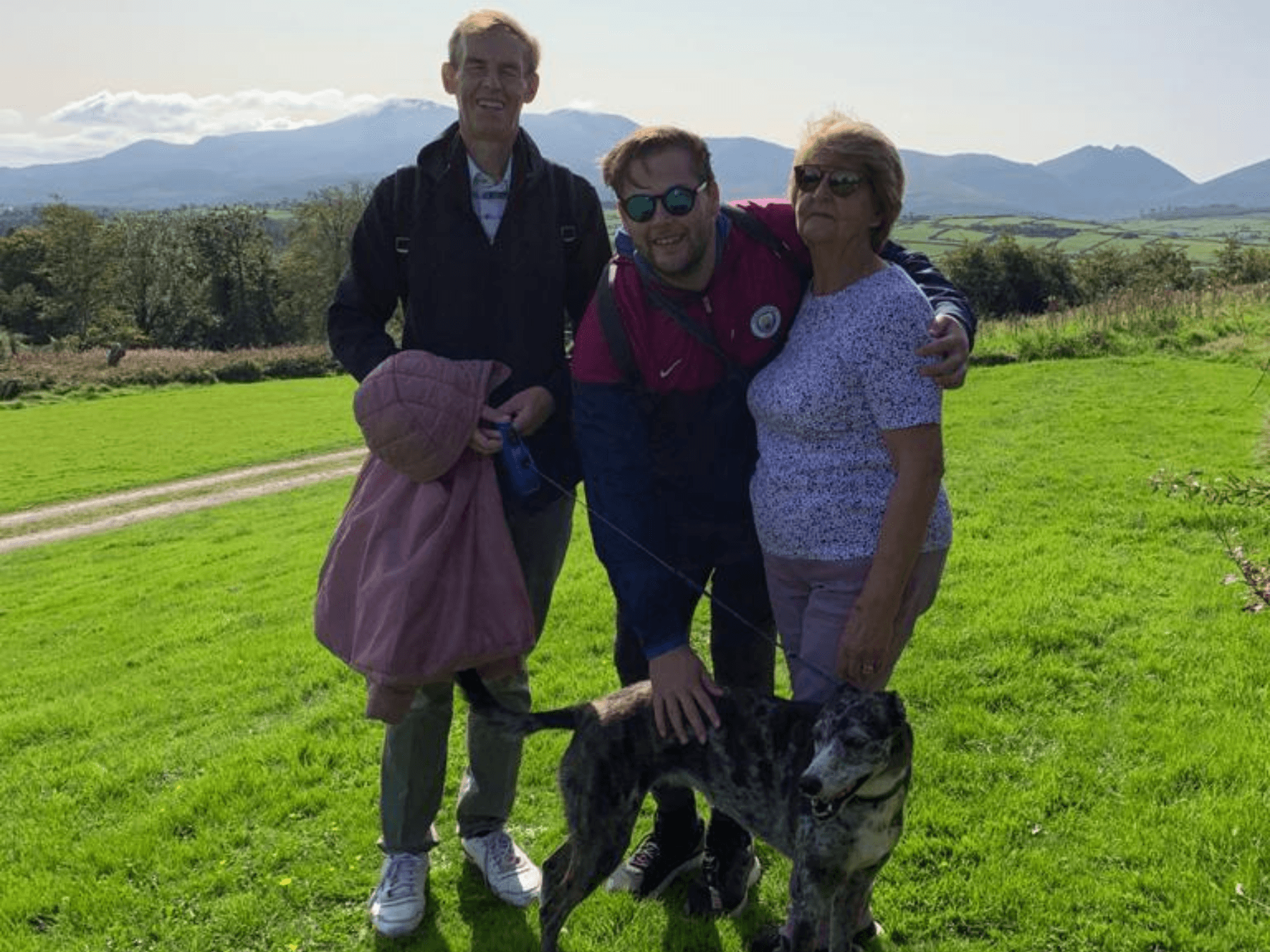
I’m part of a large family, and we’re very close. My dad was one of seven, and everyone went on to have their own big families. Dad had five children, including my brother Harry, who has a learning disability. Harry is very sociable and kind, and we’re very protective of him.
Harry: I live with my mum. We live near my brother Sam. I love him. I like to go on holiday with my family. I love being with them at Christmas.
I work at Greggs. I’m good at helping people. I like talking to customers.
What our dad meant to our family
Sam: Our dad had bladder cancer, and by the time he was diagnosed, it was already very advanced and terminal. He died just under a year later. Even though we had some time to prepare for his death, when it happened, it had a huge impact on all of us.
Dad was loving, worked hard for his children and was always there for us. He loved nothing more than spending time with family and taking us on holiday. As a result, we were all very close.
Harry: He loved me. He was proud. He reminds me, his hair, clothes. He loved me.
I have good memories with my dad. We went on holidays. We played in the pool and he held me. Good times. Dad loved me. He was proud of me.
Being honest from the start matters
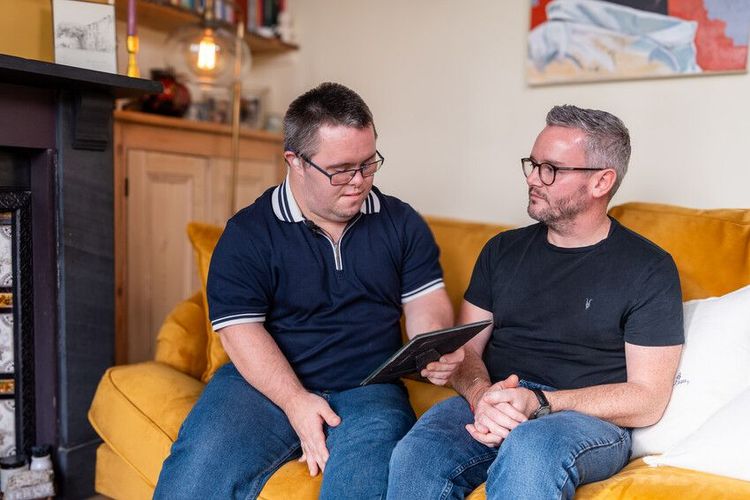
Harry: Difficult to understand. But people helped me. Talking helped. My mum, nan and Sam and my whole family.
Sam: When we told Harry that Dad had a terminal illness, we explained that he was very ill and wouldn’t get better, using clear, simple language. And we kept that approach as things went on.
Later, when Dad died, we realised how important it was not to soften or sugarcoat what had happened. We were mindful about avoiding phrases like ‘gone to sleep,’ because we didn’t want to confuse Harry, or make him worried about sleeping. The truth is that he didn’t go to sleep, he died.
We felt it was important to use clear, honest words throughout. Being open and naming things gently but truthfully helped Harry understand and begin to process his grief. It meant Harry could feel safe to talk about it and ask questions.
After the loss, Harry was worried about coping
Harry: Sad. Crying. Scared. Worried about me. How I’d manage without Dad.
It’s hard to talk about it because he loved me. He was proud.
Sam: Losing someone to a terminal illness gives you time to prepare, but it doesn’t make it any easier.
Why talking about grief matters
Sam: At one point, we realised that Harry had confused heaven with the cemetery.
He’d watched my dad’s burial, and when he heard that Dad had gone to heaven, the two became the same place in his mind. It was only through conversation that we realised what he was thinking. And when we did, we could gently explain the difference.
If we hadn’t talked, we’d never have known what Harry was thinking.
Harry: I go to the cemetery to visit Dad now. We visit his grave. We remember him. I sing hymns and light candles.
Remembering Dad and processing grief
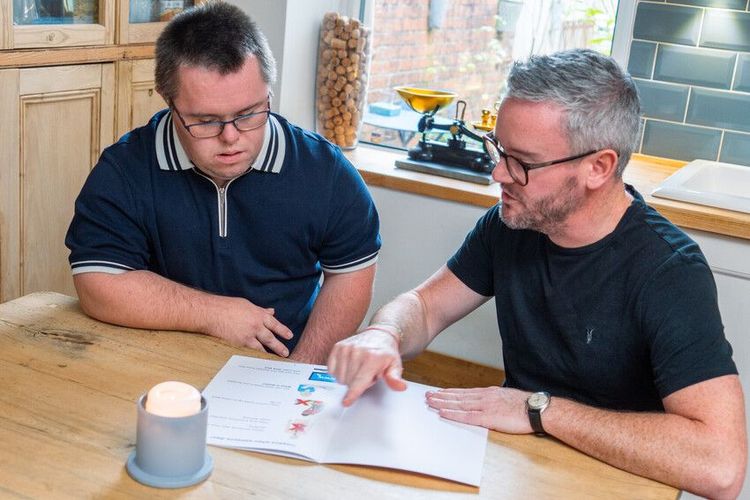
Sam: Things like visual aids and clear, short sentences can help explain things. The Marie Curie Easy Reads work well. Videos can also be helpful – Harry likes watching videos.
We talk about my dad a lot, often now with humour, although we didn’t do this initially. We reflect on both the happy and sad memories. Photos are an important aid for Harry.
Harry: Thinking and talking about Dad. Good memories. Happy. Mum says he loved me. He was proud of me.
Sam: We also try to get together as much as possible and talk about Dad naturally in these settings. We might talk about what Dad would make of us all now, or of a certain situation.
Remember to support your own grief, too
Sam: It's so important to look after yourself as well. I was so focused on supporting my mum and brother and everyone else. There was a huge weight of responsibility.
I would encourage people to take the time to recognise your own grief and what you need as well. I wish I was kinder to myself.