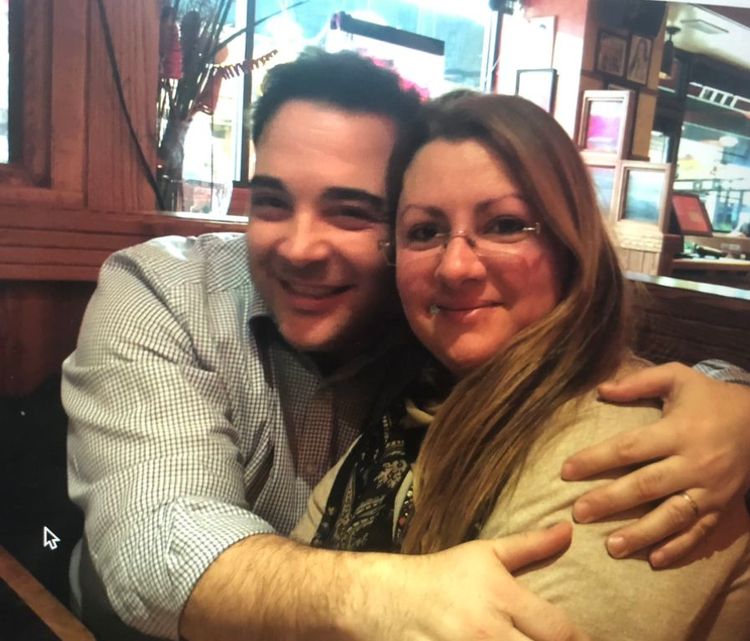
Simona’s husband, David, had stage four brain cancer. She talks about the financial burden of powering the equipment he needed to live and why families urgently need more help with energy bills.
We are still adjusting to life after David’s death – it feels so weird. David was diagnosed on 27 December 2023. We knew straight away that his diagnosis was terminal. He was given six months to live and died in June 2024.
The day he was diagnosed, he became paralysed down the right side of his body. After that he became fully paralysed and bedbound. He needed a lot of medical equipment, which is expensive to run.
Counting the cost in more ways than one
The huge gas and electricity costs I had to bear during David’s illness still cause me a great deal of pain. Having to cut back on essential costs during the most difficult time of David’s life has left me with a deep sense of guilt. The painful feeling that perhaps not enough was done for him when he needed it most.
David was granted NHS Continuing Healthcare for his care needs, but none of this covered our energy bills. It all came out of our own pocket, which was a real struggle. Many people with terminal illnesses need the heating on constantly and lights need to be on for the carers.
All the medical equipment David needed was electric. The most expensive was David’s hospital mattress with a pump to change his position and help avoid bed sores. This needed to be on all the time. It really raised the cost of our energy bills.
Energy providers don’t do enough to help
David’s condition meant that he was constantly cold, so we had to keep the heating on all the time. We discussed this with our energy companies, and the only things they provided were an electric blanket and a one-off discount of £200 – it wasn’t enough.
When David was on oxygen towards the end of his life, I spoke to the oxygen provider as the machine needed to be on all the time. They told me they would refund the cost of running the equipment. Later I had a cheque through the post from them. It was £13.
Afterwards I had a large outstanding bill from the energy company. The anxiety I felt about that is unbelievable. It’s disgraceful that I had to deal with this amount of debt with no support while still grieving.
Government support is completely inadequate
As we had the NHS Continuing Healthcare funding, there were no allowances to help us with electricity or gas bills. The funding was supposed to cover hospital equipment, but nobody considered the cost of running these items.
David had to stop working straight away. He couldn’t run his own business. We both had to start claiming state benefits, because I needed to stop work to be David’s full-time carer. The money from state benefits was barely enough to get us to the end of the month. There was no allowance for any extras.
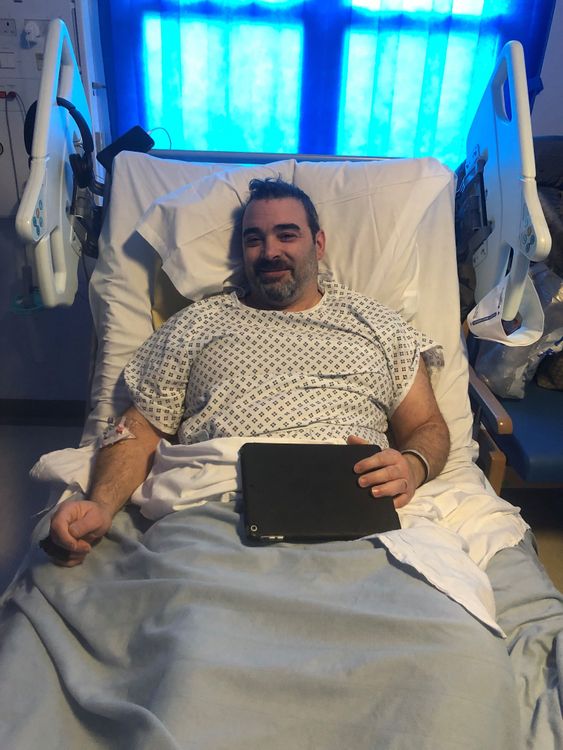
David just after diagnosis, before the energy bills mounted up
People at the end of life and their families deserve better
Families experiencing terminal illness shouldn’t be forced to make impossible decisions between whether you can afford to keep someone warm or do everything possible to keep them alive.
-
Families who have a loved one with a terminal illness need a cap on energy bills. Their loved ones depend on this equipment, and they need reassurance that they can keep powering all this equipment without worrying about the cost.
-
There should be an allowance for electricity for families affected by terminal illness. Families shouldn’t have to worry about whether they can afford to power a stairlift or not.
David had been paying his taxes his whole life. It makes me sad and frustrated to think that all this money will get wasted. He could have been more financially supported if he’d been able to access his state pension early. It would have made a big difference to us.
All rights reserved. Contact stories@mariecurie.org.uk for more information.
We’re calling on the UK Government to act
Simona and David’s story isn’t uncommon. In 2025, almost one in four people died in fuel poverty, as revealed in our new Dying in Poverty 2026 report.
We’re campaigning for a social tariff (a discounted energy rate) to protect people at the end of life from spiralling energy bills. We’re also calling for measures like adequate access to social security to make sure that people with terminal illness have enough income to live comfortably to the end.
More on our Dying in Poverty campaign
Get support with your energy bills
If you’re living with or caring for someone with a terminal illness, you could be eligible for some financial support with your energy bills. Call our Support Line free on 0800 090 2309 and ask for one of our expert Energy Support Officers.
They can give you expert information on supplier-specific support, energy grants and things like cold weather payments.