This year marks 25 years since joining Marie Curie and starting my career in palliative medicine.
Over that time, I have had the privilege of meeting and caring for thousands of people living with terminal illness, their families and carers, as well as working alongside incredibly dedicated colleagues who support them every day.
What those years have taught me is that, while the priorities of health and care systems may change, what matters most to people remains remarkably consistent. People want to be treated with dignity, care and respect. They want care that is joined up around their needs. And when the time comes, they want the opportunity not only to live well, but to die well too.
In the late 1990s, I was motivated to pursue a career in palliative medicine because I saw the difference good specialist palliative care could make for people at the end of their lives. Sadly, I also saw, all too often, people missing out on the care they needed – so I wanted to try to make a difference. Frustratingly, a quarter of a century later, and Marie Curie's Unmet Need Report published earlier this year showed that still nearly one in three people have to face the end of life without the care and support they need.
Those reflections have been very much on my mind as conversations continue about the future of social care, particularly through Andy Burnham's vision for neighbourhood-based care. There is a real opportunity to build a system organised around people's lives, communities and relationships, rather than around services and institutions.
For that vision to succeed, palliative and end of life care must be part of the conversation from the very beginning.
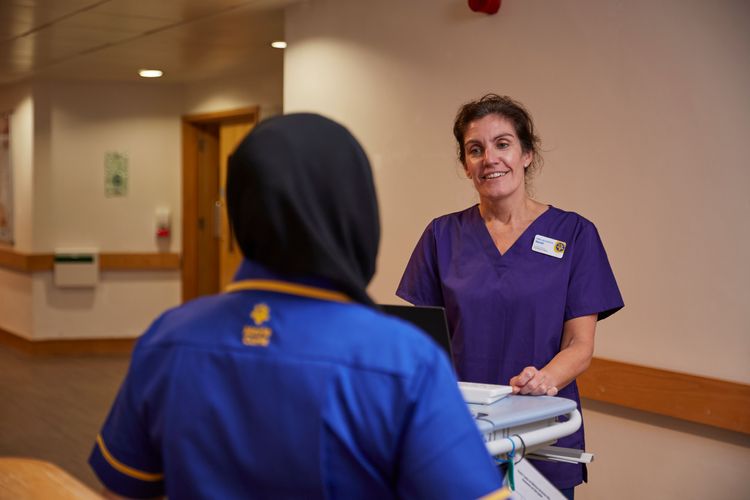
When services come together, we can achieve more for people at the end of life.
Discussions about reform regularly focus on helping people live well. Of course, that matters enormously. But a truly compassionate and person-centred system should recognise that dying is a part of life and should support people to both live well and die well. These ambitions are inseparable.
In many ways, palliative care already demonstrates what good neighbourhood working looks like. Good palliative care brings together, and is delivered by, GPs, district nurses, social workers, care providers, hospices, hospitals, specialists, voluntary organisations and family carers around the needs of an individual.
At Marie Curie, we are already working with partners across the country to develop neighbourhood-based models of palliative and end of life care.
In Derby and Derbyshire, we are supporting primary care teams to better identify and support people with palliative care needs closer to home. In Plymouth, our partnership with University Hospitals Plymouth NHS Trust embeds palliative care expertise across emergency, primary and community care settings, helping people access support earlier and avoid unnecessary crises. In Bradford, our REACT service works with the local hospital to help people approaching or within the last year of life return home with the right support, rather than remaining in hospital when it is not needed.
These examples show what can be achieved when services come together around people rather than expecting people to navigate fragmented systems.
The recent King's Fund Neighbourhood and Integrated Care Summit was a useful opportunity to hear from leaders committed to more joined-up, community-based care. However, I felt there was an opportunity to more strongly recognise palliative care's role within that vision.
Palliative and end of life care must not be allowed to be seen as 'just' a specialist service operating at the edges of the system. It is a central part of it and one of the clearest examples of genuine integration in action, and as such should be 'mainstreamed' within the system.
Rather than sitting alongside health and social care, palliative care often acts as the bridge between them, helping different parts of the system work together around what matters most to people. If we want to understand how neighbourhood care can work, palliative care offers a good place to start.
Baroness Casey recently spoke of the need to move away from an NHS that is largely a 'National Hospitals Service' – a medicalised system based in hospitals, to a vision where the public don't have to navigate their way through a complex and fragmented system. She highlights that many people don't think about adult social care until the day they need it, either for themselves or their loved ones. In a society that shies away from discussing death or dying, the same often applies to palliative care.
We need to ensure that good quality palliative care is embedded as part of our mainstream health and social care and is not seen as an added extra. In a society with a growing and ageing population, and with increasing health conditions and comorbidities, palliative care can no longer be left on the sidelines as a 'nice to have'. We know from the evidence that palliative and end of life care reduces hospital admissions, improves peoples' experience at the end of their lives and reduces costs elsewhere in the system - can we then really afford not to fund it?
We know many people would prefer to die at home, surrounded by the people they love. The best way to make that choice a reality is by strengthening neighbourhood and community care. When the right support is available close to home, more people can receive care where they choose, while avoiding unnecessary hospital admissions and experiencing greater comfort, dignity and control.
Marie Curie's mission is to fix end of life care. But achieving that will require strong partnerships, sustained investment and a shared recognition that palliative care should be woven into every neighbourhood care model.
Because the measure of a compassionate society is not only how well it helps people live, but how well it supports them at the end of life too. Nobody should die without the care and support they need.