This blog is co-authored by Esther Wakeman, Leeds Hospitals Charity CEO and Richard Bowyer, Royal Brompton & Harefield Hospitals Charity CEO.
When we talk about giving people the best possible end of life experience, we often focus on hospices, home-based support and community services.
Yet the reality is this: hospitals remain where, every year, hundreds of thousands of people spend their final days. And too often, those days do not reflect what many of us would wish for ourselves or our loved ones.
The default place of death
Only 6% of people in England and Wales say they would prefer to die in hospital, yet more than 40% of deaths still occur there. This mismatch should make us stop and ask why. Despite people’s clear preferences, and despite the well documented benefits of hospice and home‑based care, hospital continues to be the default place of death for far too many.
And the financial picture reflects this reliance on hospitals too. Of the £11.7 billion spent each year on healthcare support for people in the final year of life across the UK, an extraordinary £9.6 billion is spent in hospitals. This is not only unsustainable, but it suggests we are failing to invest in the kinds of care people want most at the end of life.
Isn’t hospital the best place for dying people?
For most people, hospitals are the wrong place for end of life care. Wrong for patients, wrong for their families, wrong for the clinical teams and wrong for taxpayers.
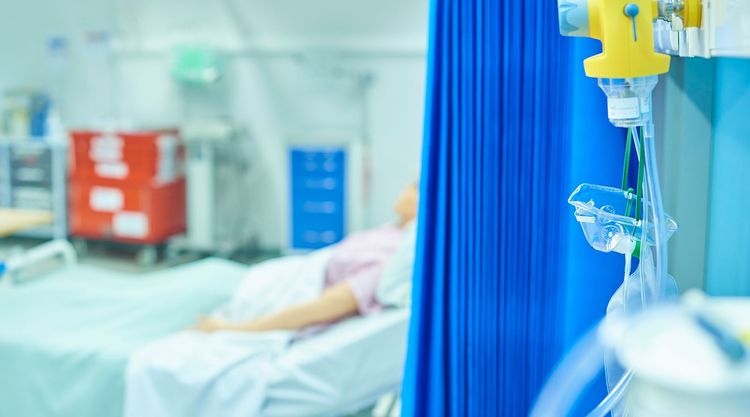
Hospitals are remarkable centres of clinical expertise. But they are rarely set up to provide the calm, person‑centred and emotionally attentive support people need as they approach the end of their lives. Wards are busy. Staff are focused on clinical responsibilities. The environment is medicalised, noisy and unfamiliar.
Although hospital is the right place for some people at the end of life, for many others it’s not. If you want to spend your final days in peace – with loved ones, in comfort, in familiar surroundings – hospitals can feel overwhelming.
A legacy of sadness and regret
Our research shows that, regardless of where people die, one in three were severely or overwhelmingly affected by pain in their final week of life. That is an unacceptably high proportion of people whose symptoms were not properly managed at a time when compassionate care should be non‑negotiable. It shows that, across the range of places where people die, care and support needs improving. And hospital is a really important one of those settings.
Bereaved families also share important insights about where the system can be strengthened. In the largest nationally representative post‑bereavement survey in a decade, almost half of respondents reported worries with at least one aspect of the care their loved one received. These experiences highlighted issues such as symptom management, communication, and the lack of a single, consistent point of contact to coordinate care – something fewer than half of respondents said they had.
Stories like the one below are far too common. They leave families not only grieving, but burdened with sadness, confusion and regret about the way their loved one’s life ended.
The difficulties of getting home from hospital
Problems are not limited to the hospital environment. Transitions between hospital and community care – when people are discharged home, into a care or nursing home or hospice care – are among the most fragile moments in the system. This is especially challenging when patients have complex needs.
People can be discharged too quickly, to places that are simply not appropriate for someone who’s dying. Meanwhile, delays in arranging community support when services are stretched can leave people stuck in hospital for longer than they want or need.
For many, the lack of timely and reliable care at home means they end up going in and out of hospital repeatedly in their last weeks and months. Our research shows that almost half of dying people had to visit A&E at least once in their final three months of life, often because they simply couldn’t access proper care elsewhere.
Part of a wider picture of missing care
This instability creates deep distress. Families often report feeling unprepared, unsupported and unsure whom to turn to – particularly out of hours, which makes up two thirds of the week. The impact is not just clinical, but emotional. Families absorb the strain, stepping into roles they were never trained for at a time of intense personal turmoil.
There’s a lot of work going on to try to fix this. For example, Marie Curie is rolling out service models which aim to reach people earlier, through their GP or by embedding end of life experts into hospital emergency departments, precisely to strengthen this fragile point in the process which can lead to so much distress.
For instance, the award-winning REACT service in Bradford, which has significantly reduced the number of days spent in hospital in the last year of life , and a partnership with University Hospitals Plymouth (UHP).
But if we’re serious about giving people the dignified and compassionate end of life experience they deserve, hospital-based palliative care must for some patients also be consistently seen as a core part of high-quality care for the patients who cannot be cared for at home.
Joining forces for greater impact
That is why Marie Curie, Leeds Hospitals Charity and Royal Brompton & Harefield Hospitals Charity have joined forces to invest in research that fills critical evidence gaps. Together, we aim to generate the robust evidence needed to influence policy and practice, ensuring that care in, and transition from, hospital truly reflects what matters most to patients and families.
By combining expertise, we want to drive meaningful change for people at the end of life in hospitals – not just for today, but for generations to come.
Improving end of life care in hospitals is not simply about redesigning systems. It is about honouring people’s wishes, reducing avoidable suffering and ensuring no one spends their final days in distress. With strong evidence, committed partners and a clear focus on what matters most, we can build a system that treats dying as the profoundly human experience it is – and supports every person with the dignity they deserve.
Marie Curie’s 2025 Research Grants Scheme, in partnership with Leeds Hospitals Charity and Royal Brompton & Harefield Hospitals Charity, called for research focused on improving the quality of care and discharge processes in hospitals for people with palliative and end of life care needs.
This reflects key research priorities identified with the James Lind Alliance, to make sure our investment aligns with what matters most to people with lived and professional experience.